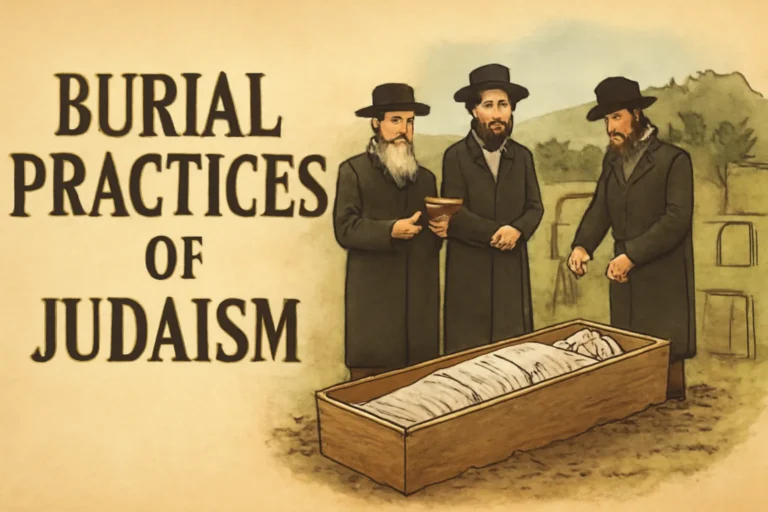
In Jewish culture, the moment when a family gathers to mark a memorial unveiling of a loved one is an occasion that blends memory, ritual, and communal support. The practice is commonly called the unveiling ceremony in English, but many communities refer to it by its Hebrew name, Hakamat Matzevah. This rite is not a funeral rite; it occurs after the burial, when a gravestone or marker is erected or revealed, and the family publicly acknowledges the life that has passed while connecting that life to a durable symbol in the ground. This article explores the meaning, history, and diverse practices surrounding the unveiling of a tombstone in Judaism, as well as how contemporary communities adapt the ritual to fit evolving values, languages, and technologies.
The central meaning of the unveiling ceremony is to honor a deceased person by creating a lasting marker that enables future generations to remember, learn, and reflect. The act embodies several interwoven purposes:
Public recognition of a life lived and a person who has shaped a family and community.
Connection between memory and place, turning an absence into a remembered presence through a physical symbol.
Closure and continuity for mourners who wish to mark the transition from intense period of mourning to a more regular life while still keeping the memory alive.
Continuity of family heritage, creating a focal point for stories, genealogies, and shared values across generations.
Respect for tradition, as many markers incorporate customary inscriptions, religious phrases, and iconography that reflect a person’s life and beliefs.
The language around the ritual emphasizes both remembrance and responsibility—responsibility to tell the deceased’s stories, to maintain the marker, and to continue acts of kindness and justice in the person’s name. For families, the unveiling can be a powerful moment of grief processing that is conducted in the context of a community that bears witness alongside them.
Important terms often accompany this moment: matzevah (tombstone), hakamat (the act of erecting), and vezivah (the inscription on the stone). Because different communities have varied customs, the exact practices and words spoken at the unveiling may differ, but the underlying aim remains consistent: to honor memory, to provide a lasting marker for future generations, and to invite ongoing study and remembrance.
Historical Roots and Evolution
The tradition of marking graves with stones and erecting markers is ancient and deeply rooted in the Land of Israel and the Jewish diaspora. Over centuries, the form and meaning of the unveiling of a tombstone have evolved in response to changing liturgical calendars, communal needs, and artistic expression. This section surveys major historical currents that shape today’s practice.
Ancient and medieval antecedents
In early Jewish communities, memory and commemoration were often anchored in living practice—annual commemorations, study circles, and acts of charity performed in the name of the deceased. The stone as a symbol of memory appears in many cultures, and in Jewish life it gradually became a tangible, durable marker. The unveiling ceremony as a dedicated rite likely crystallized as communities sought a physical locus where mourners could gather and recite prayers, study, and share stories. The act of placing a marker was, in effect, a covenant between the living and the dead: a public acknowledgment that the deceased’s life continues to shape the world through memory and values.
Renaissance of the marker in the post-medieval world
In the medieval and early modern periods, gravestones began to appear in more cemeteries as Jewish communities established formal burial grounds beyond home plots. The inscriptions on these markers—often in Hebrew, with occasional Aramaic, Latin, or Yiddish elements—became a record of names, lineage, and character. The unveiling ceremony gradually became common as cemeteries allowed or anticipated the unveiling of a monument after burial.
Modern reformulation in the 19th and 20th centuries
In the modern era, Jewish communities around the world adapted the ritual to fit urban cemetery life, architectural traditions, and the practicalities of long-distance mourning. The Hakamat Matzevah ceremony came to include prescribed or suggested prayers, readings from psalms, and sometimes memorial inscriptions that reflect contemporary values—such as inclusivity, social justice, and human dignity—while still preserving core elements like the marker’s unveiling, a moment of blessing in some communities, and the opportunity for survivors to speak or share personal reminiscences.
Typical Modern Practice: Steps, Prayers, and Inscriptions
While the concrete ritual details vary by community, many families observe a general sequence that blends tradition with personal preference. The following outline describes a commonly observed pattern, with notes about possible deviations.
Pre-Unveiling Preparations
Coordinate with a rabbi or spiritual leader to confirm dates, prayers, and permissible readings. A professional or volunteer cemetery staff may help with logistics, including the placement of the marker and the accessibility of the gravesite.
Choose the inscription on the tombstone. This often includes the deceased’s name, sometimes the date of birth and death, and a short epitaph reflecting personality, virtues, or religious affiliation.
Arrange the time for the unveiling, taking into account the family’s schedule, community customs, and cemetery rules. Some families prefer a weekday after burial, while others choose the anniversary date or the 30th day, 11th month, or first anniversary depending on local custom.
Prepare readings and participants including family members, friends, and possibly a guest speaker who will share a memory or a teaching from Jewish texts.
During the Hakamat Matzevah Waypoint
Conduct the unveiling itself: the stone is uncovered or revealed to the gathering, symbolizing the public recognition of the deceased and the community’s ongoing memory.
Offer prayers and readings: commonly recited are psalms (such as Psalm 23 or Psalm 121), selected verses from Proverbs or Psalms that speak to memory and meaning, and liturgical passages relevant to mourning and remembrance.
Deliver personal remembrances: family members or close friends may speak about the deceased’s character, achievements, and impact on others. This portion makes the ceremony intimate and transformative for attendees.
Recite or sing symbolic passages: along with traditional prayers, songs or spiritual readings may be offered to reflect the deceased’s faith and the community’s hopes for healing.
After the Ceremony
Visit the marker routinely, especially on the anniversary of the death (yahrzeit) or on holidays that honored the deceased’s memory. Jewish practice often encourages regular visitation to reinforce memory and ethical living in the name of the deceased.
Maintain the site, including cleaning the marker, ensuring appropriate landscaping, and placing stones or markers of remembrance as custom dictates in the cemetery.
Document the event for family archives or community newsletters, preserving the stories shared and preserving the legacy for future generations.
A typical unveiling ceremony may last between 20 and 45 minutes, though some families prefer a shorter or longer gathering. The duration depends on the number of speakers, the number of prayers recited, and the extent of the personal remembrances offered. Some communities incorporate a brief moment of silent reflection, followed by a collective blessing or the singing of a niggun (a wordless melodic refrain) to elevate the mood from sorrow toward memory and gratitude.
Denominational and Cultural Variations
Judaism is not monolithic, and the practice of the unveiling ceremony reflects a spectrum of beliefs and customs. The basic aim—honoring memory through a tangible marker—stays constant, but the liturgical language, the presence or absence of a blessing, and the role of community can differ markedly.
Orthodox and traditional communities
In many Orthodox contexts, the unveiling is performed with careful attention to ritual purity and propriety. A rabbi often guides the ceremony, and the following features are common:
A blessing at the unveiling in some communities, acknowledging the command to raise a memorial marker; in others, the blessing may be omitted if it is felt to be inappropriate or unnecessary.
Structured readings from the Tanakh (Hebrew Bible) and traditional prayers, with emphasis on propriety and solemnity.
Strict adherence to cemetery rules regarding timing, seating, and the handling of the marker.
Conservative and Reform communities
In Conservative and Reform settings, the unveiling ceremony often emphasizes inclusivity, accessibility, and contemporary language. Variations you might encounter include:
Selected readings from Jewish and secular sources that resonate with the deceased’s life and values.
Prayers in Hebrew and vernacular languages, sometimes including interfaith-friendly readings when appropriate for family contexts.
Greater flexibility in the timing of the ceremony, with options to combine the unveiling with a smaller memorial service or a public dedication in the cemetery or a community space.
Sephardic, Mizrahi, and other community traditions
For Sephardic and Mizrahi families, the inscription language and ritual cadence may reflect the centuries-old liturgical melodies and selected psalms characteristic of their heritage. The family might choose inscriptions in Hebrew and the deceased’s native language, alongside Sephardic piyyutim (liturgical poems) that honor memory and continuity.
Readings, Prayers, and Blessings
A central feature of the unveiling ceremony is the selection of readings and prayers. Depending on the community, a typical mix might include:
Psalm selections that evoke comfort, faith, and trust in divine justice and mercy. Psalms 23 or 121 are common, but others may be chosen to reflect the person’s character or life story.
Prose quotations from Jewish sages or modern authors who speak to memory and ethical living.
Personal tributes from family members or close friends that highlight the deceased’s generosity, humor, resilience, or compassion.
Verse inscriptions on the marker itself—short lines that capture a guiding principle, a loved one’s favorite phrase, or a motto that the deceased reflected in daily life.
The question of whether a formal blessing is recited at the unveiling has varied in practice. Some communities obligate a berakhah for the act of erecting a memorial, while others refrain from blessing in order to keep the moment strictly a time of reflection. If a blessing is offered, it is typically phrased as a statement of gratitude for sanctifying life and commanding the living to honor the dead through the act of creation or restoration of the memorial.
Logistics, Etiquette, and Practical Considerations
Planning a tombstone unveiling requires practical attention to logistics and etiquette to ensure the event is respectful and accessible for all who wish to participate.
Accessibility and timing: Choose a date and time that works for most mourners, including family members traveling from afar. Consider weather, cemetery access, and road conditions.
Attire and demeanor: The tone is typically solemn and modest. People dress conservatively, speak softly, and observe quiet moments of contemplation.
Seating and arrangements: In cemeteries or nearby halls, seating arrangements should accommodate elderly attendees, people with mobility concerns, and families with children, if present.
Photography and social media: Some families prefer privacy; others may allow respectful photographs after the event. It is courteous to ask hosts about sharing images on social media or in community newsletters.
Post-ceremony customs: Following the unveiling, families often visit the gravesite on the yahrzeit (anniversary of death) and on holidays. They may place stones, a common practice in Jewish cemeteries, as a sign of ongoing remembrance.
The Unveiling in the Modern World: Digital and Global Perspectives
Today’s unveiling ceremony has expanded beyond its traditional confines in several ways, reflecting broader social, technological, and geographic trends. Some communities embrace:
Coordinated livestreams for distant relatives who cannot attend in person, ensuring that memory remains a shared family event.
Digital memorial pages or virtual plaques that accompany real-world markers, allowing photos, biographies, and prayers to be preserved and accessed globally.
Interfaith and cross-cultural openness in some settings, where families include loved ones from different faith backgrounds who share a commitment to memory, education, and mutual respect.
Environmental considerations in marker design and cemetery practices, including the choice of materials, sustainable maintenance, and the integration of memorial landscapes with nature.
Yet even as technology changes how families share and maintain memory, the core human elements endure: the desire to name a life, to provide a marker for future generations, and to gather in gratitude and sorrow to speak a few meaningful words about a person who shaped the world in quiet, enduring ways.
As with many religious rituals, misunderstandings can arise about the unveiling ceremony. Below are clarifications of common questions.
Is a blessing always given at the unveiling? No. Some communities opt for a blessing, while others do not. It depends on local custom, rabbinic guidance, and family preference.
Does the unveiling require a particular time of year? Not universally. Some families align the date with the yahrzeit or with a convenient post-burial window, while others may choose a date that accommodates extended family travel or cemetery schedules.
What about funeral attendees who are not part of the religious community? Many families welcome friends and neighbors of diverse backgrounds. The core purpose—memory and honor—can be respectfully shared with all who wish to participate.
Are there prescribed prayers for the marker itself? Some communities use standard prayers and psalms; others incorporate the deceased’s favorite passages, including non-kosher or secular readings when appropriate for the family context.
Frequently Asked Questions
Who should speak at the unveiling? Typically, close family members or a designated speaker who can share a meaningful memory or teaching. A rabbi or cantor may offer guidance or prayers.
How long should a marker be kept clean and legible? Maintenance is typically a long-term obligation for families and cemetery caretakers, with periodic cleaning and restoration as needed to preserve inscriptions.
Is this ceremony open to friends and alumni or only close relatives? In most communities, it is open to anyone who wishes to attend, but families may set boundaries that reflect their preferences for privacy.
What happens if the marker is not ready at the time of burial? The unveiling may be scheduled days, weeks, or months after the burial, depending on the cemetery’s policies and the family’s readiness.
Conclusion: The living bond between memory and place
The unveiling ceremony in Judaism is more than a ceremonial act; it is a ritual that binds memory to place, past to present, and individual life to a broader tapestry of community and values. Across diverse Jewish communities—Orthodox, Conservative, Reform, Sephardic, Mizrahi, and others—the core idea remains consistent: a marker is raised to invite ongoing reflection, storytelling, and ethical living in the name of the deceased. The hakamat matzevah is a bridge between mourning and memory, between loss and the living obligation to remember, learn, and do good in the person’s honor.
As societies continue to change, the unveiling of a tombstone remains a powerful moment of witness: a family and a community together acknowledge a life, celebrate a legacy, and commit to carrying forward the values that the deceased exemplified. Whether through solemn prayers, heartfelt stories, or contemporary formats that include digital memorials and inclusive readings, the ritual persists as a living practice—one that reconciles grief with gratitude and memory with meaning.