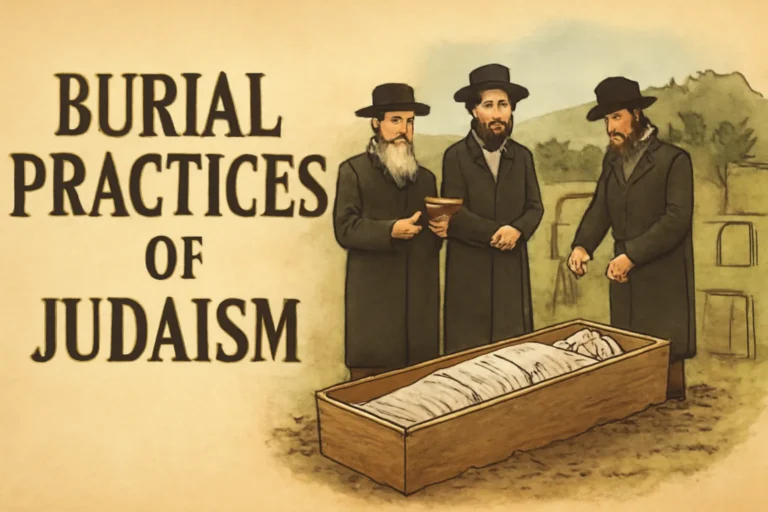
The Jewish burial service is a measured, sacred act that blends reverence for the departed with support and consolation for the living. Across communities and over time, a core set of prayers and readings has emerged to guide the ceremonies surrounding a life ended and a community in mourning. This article offers a comprehensive look at the traditional prayers that appear in Jewish funeral rites, explores the meaning behind them, and outlines the etiquette that attends to mourners, attendees, and the sacred rhythm of the service. It also considers the variations that exist among Ashkenazi, Sephardi, Mizrahi, and modern movements, emphasizing the shared values while acknowledging differences in practice and pronunciation.
Core Prayers and Readings in the Funeral Service
In many communities, several prayers recur across funerals and shiva (the period of mourning). Each prayer has its own historical roots, theological emphasis, and moments within the service when it is typically recited. The following sections present the primary prayers, their liturgical function, and what they traditionally mean for mourners and friends who gather to mourn the deceased.
Kaddish Yatom — The Mourner’s Kaddish
The Kaddish is one of the most central and distinctive elements of Jewish funeral practice. The form commonly recited by mourners is called the Kaddish Yatom, or the Mourner’s Kaddish, and it is typically said with a minyan (a quorum of ten adults). Although the Kaddish does not mention death or the deceased explicitly, it serves as a sanctification of God’s name and a declaration of faith that endures even in sorrow.
Meaning: The Kaddish is a work of praise and affirmation. It bears witness to God’s sovereignty and the hope that God’s name will be magnified and sanctified “forever.” The mourners’ recitation of the Kaddish expresses both grief and trust, creating a bridge between loss and continuity.
Variations: In different communities, the wording may vary slightly, and some congregations add minor methodological variations in the cadence or the manner of chanting. Some circles include a brief introductory line about the mourner’s loss before the prayer, while others present the Kaddish in a more formal, liturgical cadence. In every case, the core idea remains: to honor God and to sustain communal life in the face of death.
Practical notes: The presence of a minyan is often required for certain portions of the Kaddish to be recited publicly. In circumstances without a minyan, family members may recite parts of the Kaddish silently or postpone certain sections until a minyan is formed. The Kaddish is also recited at other occasions, such as on recalling a deceased relative during a yahrzeit (anniversary) or in memorial services, though the Mourner’s Kaddish remains the most closely associated with burial and Shiva.
El Malei Rachamim — The Prayer for the Deceased
Across many Jewish communities, the El Malei Rachamim (God, Full of Mercy) is a central prayer for the deceased during funeral services and memorial occasions. It is a solemn request for rest and peace for the departed and often appears near the conclusion of the service. The textual language emphasizes mercy, repose, and memory, inviting God to grant the departed rest among the righteous and to bring comfort to the mourners through the memory of the deceased’s life.
Meaning: The prayer asks God to grant the soul of the deceased permanent rest, to shelter it under God’s wings, and to bring peace into the family and community. It frames death within the larger order of creation and divine mercy.
Variations: The wording may shift slightly by tradition; Sephardic and Mizrahi communities sometimes incorporate unique liturgical melodies or additional requesting phrases. In some congregations, the imagery of light, shade, and everlasting memory is emphasized in different lines, but the core intention remains the same: to honor the dead and to comfort the living.
Performance notes: The El Malei Rachamim is often recited by a leader or by assembled participants, with the mourners participating actively. Its cadence tends to be slower and more contemplative, inviting quiet reflection among those present.
Avinu Malkeinu — Our Father, Our King
In many communities, especially among Ashkenazi Jews, Avinu Malkeinu is a penitential prayer traditionally said during fasts and certain holydays, but it is sometimes incorporated into funeral rites as a petition for mercy on behalf of the deceased and the bereaved. When included, it takes on a tone of supplication, humility, and mercy, inviting God to grant the departed rest and compassion to the mourning family.
Meaning: The prayer centers on the relationship between a person and God as a Father and a King. It invites divine mercy, compassion, and shelter for the living as they face loss, while also asking for mercy for the soul of the deceased.
Variations: Some congregations recite Avinu Malkeinu in prose or set liturgical phrases in the order of the service, while others place it toward the end of the service or during times of communal supplication. It is less universal at all funerals than Kaddish or El Malei Rachamim, but it remains a meaningful option in communities that value its liturgical voice.
Psalms and Readings — Psalm 23 and Other Verses
Poetic and liturgical readings are a common feature of Jewish funeral rites. Psalm 23 (the Shepherd Psalm) and other Psalms are read or chanted to express trust in God’s guidance and the hope of peaceful rest. The use of Psalms emphasizes a personal, intimate encounter with God, allowing mourners to voice their inner response to loss in a structured, ancient form.
Meaning: Psalms provide a language for both sorrow and consolation. They can be spoken aloud by an individual mourner or shared by the community as a unifying moment of prayerful reflection.
Variations: Some communities include additional Psalms or alternate readings depending on the family’s tradition or the deceased’s own preferences. The choice of psalms may be influenced by regional liturgical customs or by the memory of the deceased.
Other Readings and Fragments — Bridging the Sacred with Personal Remembrance
Beyond Kaddish, El Malei Rachamim, Avinu Malkeinu, and Psalms, many services incorporate short readings from sacred literature, verses about memory and legacy, or personal tributes contributed by family members. These elements help to personalize the service while maintaining the integrity of the traditional liturgical framework.
Personal tributes: In some communities, close family members offer brief reflections, blessings, or memories of the deceased. These remembrances are kept concise so the service retains its formal cadence and allows others to participate in the prayers.
Readings from sacred texts: Short passages from the Hebrew Bible or later Jewish liturgy can be included to emphasize themes of life, memory, and continuity. The use of such texts varies by community and by family preference.
Meaning, Theology, and the Purpose of the Prayers
The prayers of the Jewish burial service are not merely ritual recitations; they embody a shared theology about life, death, and the relationship between the living and the dead. Several themes recur across prayers, and they offer mourners a framework within which to process grief, find solace, and maintain faith during a difficult time.
Sanctification of God’s Name: The Kaddish declares God’s greatness and sanctity even in the face of loss. It is a reminder that the community’s faith persists and that divine sovereignty remains intact.
Rest for the Departed: El Malei Rachamim emphasizes the hope that the deceased will find peaceful rest. This is not the end of a person’s story but a transition within a larger divine order.
Mercy and Compassion: Avinu Malkeinu and El Malei Rachamim together highlight God’s mercy and compassion, offering consolation to mourners who seek relief from distress and a sense of mercy toward the one who has died.
Memory and Legacy: Readings from Psalms and other passages frame death within the living memory of family and community. They underscore that a person’s impact continues through relationships, acts of kindness, and communal memory.
Communal Support: The presence of a minyan and the collective recitation of prayers emphasize that mourning is not carried alone; the community shares in the burden and aids in ethical and spiritual healing.
Etiquette for Mourners and Attendees
Followers of Jewish tradition approach funerals with specific conventions designed to honor the dead, protect the mourners’ dignity, and maintain reverent space for prayer. The etiquette surrounding these rites helps to preserve the sanctity of the moment while enabling family and friends to participate meaningfully.
General Conduct and Appearance
Modest dress—Black or subdued colors are often preferred, though the precise expectations vary by community. The aim is to reflect humility, restraint, and respect for the solemn occasion.
Quiet demeanor— Speak softly and listen attentively. Avoid loud conversations near the aron (the casket) or during the recitation of prayers.
Phone and technology— Silence phones and minimize distractions to honor the sanctity of the service.
During the Service
Participation— Mourners are encouraged to participate in the recitation of Kaddish and El Malei Rachamim where possible, especially with a minyan. Family members should be mindful of timing and pacing so others can follow along.
Respectful presence— Stand or sit in accordance with the leader’s cues, and avoid leaving in the middle of prayers unless absolutely necessary.
Silence around the aron— Maintain a respectful, quiet distance when the casket is present, and refrain from photographs or intrusive behavior unless explicitly allowed by the family or the rabbi.
Shmira, Taharah, and Burial Protocol
Shmira— The practice of guarding the deceased with prayers and a ritual accompaniment prior to burial is performed by a designated group. Respect for this process and the volunteers who oversee it is essential.
Taharah— The ritual washing and preparation of the body by the Chevra Kadisha are sacred acts conducted with privacy and dignity. Family members generally observe respectfully and may participate only under guidance.
Subsequent burials— If burial is delayed for any reason (e.g., transportation, weather), family and mourners should continue to show courtesy and restraint, maintaining reverence for the process as it resumes.
Commemoration at the cemetery— When the burial is complete, mourners may participate in additional prayers or expressions of blessing, often concluding with phrases of comfort and memory.
Shiva and shiva-specific etiquette— The days following the burial feature specific customs and speech norms. Attendees should follow the family’s guidance on visiting hours, limitations on noise, and any particular customs the family observes.
Yizkor and memorial observances— Depending on tradition and calendar, families may observe Yizkor on certain holidays. Participation should be guided by the family’s wishes and communal norms.
Judaism comprises a broad spectrum of communities, and burial service practices reflect historical, liturgical, and cultural differences. While the core set of prayers—Kaddish, El Malei Rachamim, and, in many places, Psalms—is widely shared, the ways they are sung, spoken, or placed in the service can differ.
Ashkenazi versus Sephardi and Mizrahi Traditions
In Ashkenazi communities, the Mourner’s Kaddish is often recited aloud with a minyan, and El Malei Rachamim typically serves as a solemn closing prayer. The melodies and cadence of the prayers reflect European liturgical inheritance, and readings may incorporate local traits and languages such as Yiddish or Ladino elements in some settings.
In Sephardi and Mizrahi traditions, the text remains rooted in the same core prayers, but there may be distinctive melodies, additional verses, or variations in the order of readings. Some Sephardi communities incorporate more extensive use of El Malei Rachamim, sometimes with unique pidyon or poetic lines, and the role of communal singers and cantors can be especially prominent in shaping the final moments of the service.
Conservative, Reform, and Reconstructionist Perspectives
Modern Jewish movements often adapt the liturgical form while preserving the essential prayers’ meaning. In Conservative and Reform congregations, for instance, there may be more flexibility regarding the use of a minyan, the inclusion of certain readings, or the timing of the Mourner’s Kaddish. Some communities may offer a memorial service that emphasizes remembrance, ethical reflection, and personal biography in addition to the traditional prayers. The overarching aim is to honor the deceased while offering meaningful comfort to the mourners in the contemporary context.
Practical Guidance for Families and Clergy
Planning and guiding a Jewish funeral involves coordination among family members, a rabbi or cantor, and the lay leaders who help with logistics. While the exact practices may vary, there are common practical guidelines that help ensure the service remains dignified and spiritually meaningful.
Planning the Service
Decide on the core prayers— Identify which of the traditional prayers your community uses most frequently, and consider whether to include Avinu Malkeinu or additional readings in your context.
Consider the sequence— A typical order includes a period of prayer surrounding the burial, a reading of Kaddish Yatom with a minyan, El Malei Rachamim, and Psalm readings, followed by special remarks or eulogies as desired.
Coordinate with the chevra kadisha— If Taharah is part of the process, work with the Chevra Kadisha to understand their schedule, guidelines, and the role of family members who wish to participate.
Etiquette for Clergy and Speakers
Speak with clarity and reverence— Clergy should use language that respects diverse backgrounds and avoids overly graphic descriptions of death, focusing instead on memory, meaning, and consolation.
Acknowledge the mourners— Give space for quiet reflection, and offer accessible explanations of the prayers for attendees who may be new to Jewish liturgy.
Respect the timing— Keep the service within a reasonable length while honoring the gravity and beauty of the rites. Allow mourners to participate as they are able.
Frequently Asked Questions about Jewish Burial Prayers
For families and communities navigating a funeral, questions often arise about the use and meaning of these prayers. Here are concise answers to common inquiries.
Why is the Mourner’s Kaddish recited at a funeral?
The Mourner’s Kaddish is recited to affirm life and faith in God in the midst of loss. It is a public, communal prayer that helps mourners participate in the life of the community and feel supported by the community’s ongoing presence after the death of a loved one.
What is the role of El Malei Rachamim at a funeral?
El Malei Rachamim acts as a compassionate, solemn request for rest for the deceased. It acknowledges the mercy of God and the hope that the departed enjoys peaceful repose. This prayer can provide a bridge from a sorrowful moment to a contemplative, hopeful posture.
Are there variations to include or exclude certain prayers?
Yes. Variations depend on tradition, family preference, and the rabbi’s guidance. Some services emphasize Kaddish and El Malei Rachamim, while others include Avinu Malkeinu or additional readings. The important thing is that the prayers reflect the community’s values and the deceased’s memory while offering comfort to mourners.
What about non-traditional or interfaith families?
Many congregations welcome interfaith families and adapt the service with sensitivity and respect. The goals remain the same: to honor the dead, support mourners, and acknowledge community continuity, while honoring the beliefs and identities of the participants. Clergy often collaborate with families to design a service that preserves Jewish dignity and inclusivity.
Conclusion — The Living Continuity of Prayer and Memory
The Jewish burial service binds the living and the dead through a carefully crafted sequence of prayers, readings, and rituals. The core prayers—notably the Kaddish Yatom and El Malei Rachamim—provide a durable framework for mourning that acknowledges loss while affirming faith, mercy, and memory. The surrounding readings, melodies, and personal testimonies offer space for individual experience within a communal cadence, reflecting the Jewish conviction that a life is never truly separated from the people who remember it and carry it forward in acts of kindness and remembrance.
Whether you come from an Ashkenazi, Sephardi, Mizrahi, Conservative, Reform, or Reconstructionist background, the essential aims of burial prayers remain clear: to honor the deceased, to comfort the mourners, and to sustain the community through a shared expression of faith. By understanding the meanings behind the prayers and observing their etiquette, participants can approach this sacred rite with reverence, compassion, and a sense of responsibility for the memory of one who has passed away.