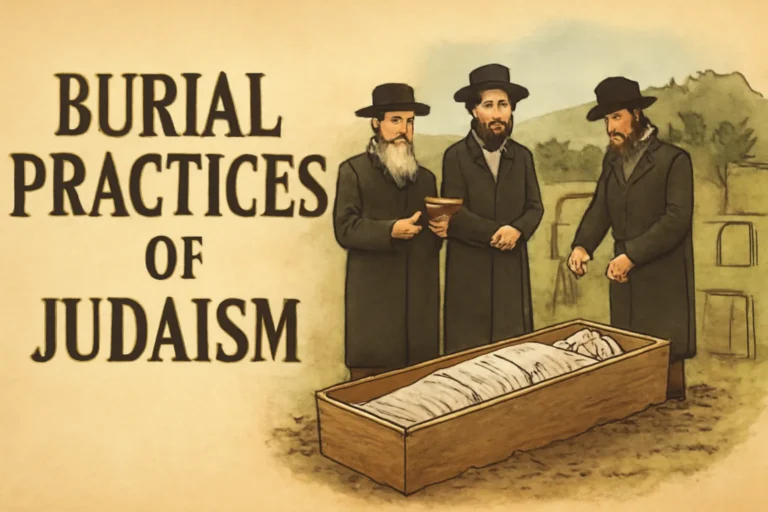
In Jewish communities around the world, mourning is faced with a blend of solemn ritual, communal support, and enduring memory. The prayers and practices surrounding death are designed to honor the deceased, comfort the bereaved, and elevate the soul of the one who has passed. This article explores the major prayers, blessings, and traditions that shape Jewish funeral rites and mourning periods. It highlights the roles of the chevra kadisha, the prayers recited at the graveside and in the home of mourning, and the variations that arise across Ashkenazi, Sephardi, and Mizrahi communities. Whether you are attending a service, participating in a shiva, or preparing for a family member’s loss, understanding these elements can help you participate with reverence and clarity.
Jewish mourning prayers serve several interconnected purposes: to acknowledge the reality of death with faith, to honor the memory of the deceased, to comfort the mourners, and to sustain the community as it accompanies the family through grief. The central prayers and rituals include declarations of faith in God’s judgment, the Kaddish (and its variations) recited by mourners, memorial prayers like Yizkor, and supplications for mercy and peace that are said at or near the graveside and during the days of mourning.
Across traditions, the order and exact recitations can differ, but the essential elements remain common: a public affirmation of God’s sovereignty in the face of loss, an expression of love and memory for the deceased, and a communal offer of support to the bereaved. In addition to the formal prayers, there are quiet rituals—such as the Taharah (the ritual washing of the body by the Chevra Kadisha) and the Hesped (the eulogy)—that carry deep spiritual significance.
The core prayers at the moment of death and burial
Baruch Dayan Haemet and related phrases
When a death is confirmed, a short blessing is recited to acknowledge God as the true judge. The phrase Baruch Dayan Haemet means “Blessed is the true Judge.” It is a brief, solemn acknowledgement that death enters the world and that God’s sovereignty remains supreme even in sorrow. In many communities, this blessing is spoken by a family member or a person of standing in the community and may be followed by the phrase haemet (the truth) or a brief silence that allows for reflection. The exact wording may vary, but the act of uttering Baruch Dayan Haemet signals to mourners and guests that life has changed in a fundamental way.
A related note of blessing appears later in the process, when the mourners prepare to accept the loss publicly in prayer and ritual. These moments are not merely formalities; they acknowledge the gravity of mortality and the belief that God’s governance includes the human story, even in distress.
Mourner’s Kaddish (Kaddish Yatom) and its role in mourning
The centerpiece of many Jewish funeral observances is the Kaddish Yatom, commonly known as the Mourner’s Kaddish. This prayer is not about death itself but about magnifying God’s holiness and sanctifying God’s name in the presence of the mourners. The mourner recites Kaddish to affirm life, faith, and hope even amid grief, and doing so in the company of others helps sustain the community soul of the bereaved.
The Kaddish Yatom is traditionally recited by mourners during daily prayer services for a prescribed period. The exact duration can vary by tradition: for example, many traditions designate a mourning period of 11 months for a parent, with shorter periods for other relatives and in some cases specific customs during the shiva, shloshim, and beyond. What remains universal is the practice of the mourner standing with the minyan (the quorum of ten adults) and expressing a petition for God’s healing and peace through language that elevates God’s name.
Beyond the home and the synagogue, some families incorporate the Kaddish Yatom into memorial services, gravely marking the transition from the grave to the next stage of mourning. In synagogues that have a dedicated mourner’s schedule, the community often times the recitation with others who share the loss. The Kaddish is also recited in variations in different languages—English, Hebrew, Ladino, or other community languages—so that mourners who do not know Hebrew can still participate meaningfully.
Prayers at the graveside and during the funeral service
El Malei Rachamim: The heavenly guardian of mercy
One of the most poignant and widely observed prayers at Jewish funerals and graveside services is El Malei Rachamim, the prayer for mercy. This supplication asks God to grant eternal rest to the departed and to shelter their souls under God’s wings. It is a somber, lyrical prayer that acknowledges the tragedy of human mortality while expressing hope in God’s boundless compassion. In many communities, El Malei Rachamim is recited at the graveside after the body is lowered and again in the house of mourning during the days of shiva or during the funeral service itself.
The text varies by tradition. Ashkenazi liturgy often includes a version that emphasizes God’s mercy, while Sephardic and Mizrahi rites may adapt the phrasing to reflect distinct liturgical melodies and scriptural readings. In all cases, the core appeal is to God as the compassionate judge who guards the souls of the righteous and whose light sustains the living as they accompany the dead to their resting place.
Av Harachamim: A plea for mercy in some communities
In many Sephardic and some Ashkenazi communities, Av Harachamim appears as an additional liturgical piece during the funeral or matzeiva (gravestone) preparations. The name translates roughly to “Father of Mercies,” and the prayer asks God to show mercy to the deceased, to judge with fairness, and to grant the soul eternal rest. Its presence and exact placement vary by community tradition, but for many mourners it is a powerful moment that emphasizes the mercy that transcends earthly judgments.
Psalm 23 and related psalms: Comfort through sacred poetry
Psalms are a central feature of Jewish mourning. Psalm 23 (“The Lord is my shepherd”) is especially associated with comfort and guidance through darkness toward light. Other frequently recited psalms include Psalm 121 (“I lift my eyes to the hills”) and Psalm 91 (a psalm of protection). During the funeral service and in the home of mourning, these verses are offered as spiritual sustenance, reminding mourners that God’s presence surrounds them, especially in places of sorrow and uncertainty.
Shiva, shloshim, and Yizkor: Mourning periods and their prayers
The week of shiva and the daily recitation of Kaddish
The shiva is the initial seven days of intensive mourning after the burial, during which family and friends gather in the home of the bereaved to provide support. During this period, mourners typically recite or participate in the recitation of the Kaddish Yatom at least once daily, often in the presence of a minyan. The rhythm of the day—prayers, study, and shared meals—helps create a healing structure for those who are grieving. In many communities, family members also read or sing psalms, and visitors offer hesed (acts of loving-kindness) and companionship that sustains the mourner’s spirit.
The shloshim and ongoing remembrance
After shiva, the next phase is the shloshim, the thirty-day period during which mourners gradually re-enter daily life while continuing to honor the memory of the deceased. The prayers during shloshim remain infused with reverence for the dead; mourners may continue to recite Kaddish Yatom publicly and privately, and family members often take on the responsibility of saying Yizkor on memorial days.
Yizkor: Memorial prayers for remembrance
Yizkor is a special service of remembrance conducted on specific holidays (such as Yom Kippur, Shemini Atzeret/Simchat Torah, Passover, and Shavuot) and, in some communities, on the anniversary of a loved one’s death (yahrzeit). The service invites families to recall the souls of their departed and to recite the names of loved ones. The ritual is not universally obligatory for all mourners, but for many families it is a poignant moment of reflection and connection with generations of ancestors. Some communities say the Yizkor prayers with the light of candles lit in memory, and others include readings from scripture or personal remembrances.
Chevra Kadisha and Taharah: Ritual purity and preparation
The sacred role of the Chevra Kadisha
A central, often quiet, pillar of Jewish funeral practice is the Chevra Kadisha, the holy burial society. This devoted group prepares the deceased in a ritual called Taharah (the purification), washing or anointing the body with traditional rites of purity, and dressing the departed in simple white shrouds. The Chevra Kadisha’s work is performed with profound respect, humility, and privacy, reflecting the belief that every life is sacred and ends with dignity.
Taharah is performed with careful attentiveness by members of the Chevra Kadisha, who recite prayers and psalms as they complete the purification ritual. The ritual is not a medical or hygienic procedure; it is a sacred act that honors the body and the life it once held. Families may be invited to participate in a later stage of the preparation or to witness portions of the process, depending on community custom and the family’s wishes. This ritual underscores the Jewish belief in the unity of body and soul and the respect due to the deceased.
Variations across communities: Ashkenazi, Sephardi, Mizrahi
Jewish liturgy reflects a rich tapestry of traditions. While the core prayers—Baruch Dayan Haemet, Kaddish Yatom, El Malei Rachamim, Av Harachamim, Yizkor, and psalms—appear in many communities, the language, order, melodies, and even the emphasis of certain prayers differ according to nusach (liturgical tradition) and ethnic or communal rites.
Ashkenazi communities often emphasize the structure of the shiva and the daily recitation of the Kaddish Yatom in a six- or seven-day sequence, with a strong chord of communal presence and the use of the Hebrew and Aramaic phrasing customary to their tradition.
Sephardi and Mizrahi communities may place the Av Harachamim prayer at a different point in the service and often incorporate melodic modes from their own liturgical tradition. They may also place greater emphasis on Yeridah (descending themes) of mourning in certain prayers and readings in their native languages (Ladino, Judeo-Arabic, etc.) alongside Hebrew.
In some communities, prayers are adapted for local languages, making it possible for non-Hebrew speakers to participate more fully. The idea of momento and memory remains universal; the exact wording is adapted to preserve meaning while making the prayers accessible to all attendees.
Practical guidance for mourners: participating with dignity
Attend with respect: If you attend a funeral or a shiva house, dress modestly and speak softly. The atmosphere is one of contemplation and shared sorrow, not celebration.
Participate mindfully: If you are able to join a minyan, you may participate in the recitation of Kaddish Yatom and other prayers. For those who cannot read Hebrew, you can listen, reflect, and offer personal prayers of remembrance.
Offer practical support: In the days and weeks of mourning, practical acts of kindness—cooking meals, helping with chores, or providing child-care—are meaningful expressions of solidarity that accompany the spiritual prayers.
Respect the rhythm: The mourning periods have a natural cadence—shivah, shloshim, and beyond. Avoid scheduling celebratory events during these times unless invited by the family and done with sensitivity to their grief.
Learn the terminology: Knowing terms like Hesped, Chevra Kadisha, Taharah, Kaddish Yatom, and Yizkor helps you participate more confidently and supportively.
Common customs and their meanings
Laying a stone at the grave: A traditional act affirming memory and continuity, inviting others to remember and visit.
El Malei Rachamim and Av Harachamim as a chorus of mercy: These prayers are not merely requests but a shared experience of hope for peace and mercy beyond the boundaries of human life.
Lighting a yahrzeit candle on the anniversary of a death: A symbolic act to keep the memory aflame and to guide families through the year ahead.
Eulogies (Hesped): A balanced narrative of the deceased’s life, virtues, and humanity, often followed by a moment of silence or reflection.
Textual variations and how to approach liturgy respectfully
If you are preparing to help a family or are listening to prayers in a different community, remember that the exact wording of prayers can vary. When in doubt, focus on the intention—the charity of creating a space of mourning, memory, and hope. If you encounter ceremonial phrases in Hebrew that you do not understand, you can ask a member of the congregation or the rabbi for a gentle explanation. The goal is participation that is intimate and meaningful, not merely rote recitation.
Baruch Dayan Haemet — “Blessed is the true Judge.” A recognition of God’s sovereignty in death.
Kaddish Yatom — The prayer for the sanctification of God’s name through the voice of the mourners.
El Malei Rachamim — A plea for merciful rest for the departed.
Yizkor — A memorial service remembering the deceased on specific holidays or yahrzeits.
Taharah — The ritual purification performed by the Chevra Kadisha.
Putting it all together: a cohesive view of Jewish funeral prayers and mourning traditions
The set of prayers and customs surrounding death in Judaism is not a single liturgy but a living conversation across generations. It blends the public dimensions of communal prayer with the intimate acts of memory, respect, and care within the family. The funeral service and grave-side rites establish a solemn boundary between life and loss, while the long arc of mourning—the periods of shivah and shloshim and the eventual remembrance on yahrzeits—ties the individual into the larger tapestry of family history and community continuity.
Whether you are a mourner, a family member, or a friend visiting a home of mourning, you participate in a tradition that has endured for centuries. The prayers used—whether in their classic Hebrew forms, their English translations, or their musical renditions—are meant to uplift the soul and sustain the living. They offer a structure for expressing grief, honoring memory, and affirming faith in a future where peace and mercy endure.
Conclusion: enduring memory through prayer and practice
Jewish funeral prayers and mourning traditions are designed to honor a life that has ended while offering comfort to those who remain. From the solemnity of Baruch Dayan Haemet to the collective recitation of Kaddish Yatom, from the mercy-seeking verses of El Malei Rachamim to the communal memory fostered by Yizkor, these elements form a coherent system of meaning. They help families navigate the loss with dignity, help the community provide tangible support, and create a lasting memory that honors the deceased.
If you are preparing for a loved one’s passing or supporting someone who is grieving, consider speaking with a rabbi or a member of the Chevra Kadisha to understand local practices, timings, and etiquette. In all cases, the aim remains clear: to honor the life that was, to hold the living in care, and to trust in a compassionate, merciful continuation of memory.