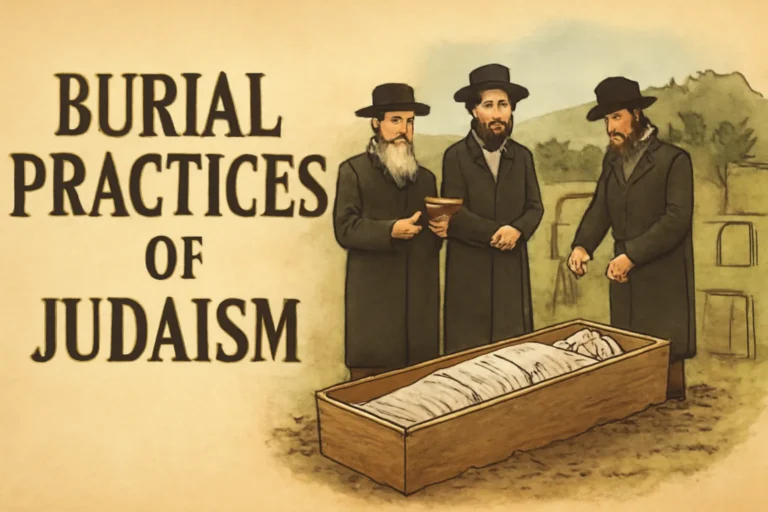
The unveiling ceremony for a Jewish grave is a solemn ritual that follows a burial and precedes ongoing memorial practices. In many communities, this event marks the moment when a family, friends, and mourners gather to reveal the headstone (the matzevah) at the grave site and to honor the memory of the deceased. The ceremony is not a universal obligation; rather, it is a long-standing custom that varies by denomination, tradition, and local cemetery rules. It is common for the ritual to occur approximately one year after the burial, though timing can differ widely depending on family readiness, travel considerations, weather, and cemetery policy. The phrase “haflatah matzevah” (Hebrew for the unveiling of the grave marker) is sometimes used in synagogues and cemeteries to describe this moment, but many communities simply refer to it as the grave marker unveiling or the matzevah unveiling.
In its essence, the unveiling ceremony is about memory, continuity, and kavod (respect) for the deceased, and it also serves as a quiet, public sign that the mourners are continuing along the path of mourning with support from the community. It is typically a religious or spiritual moment, but depending on the community, it may be accompanied by secular or personal reflections as well. The ceremony is often brief, reverent, and focused on prayer, gratitude, and the blessing of the living who carry forward the memory of the departed.
Meaning and purpose of the unveiling
The unveiling of a grave marker carries multiple layers of significance—historical, religious, emotional, and communal. For many families, it is a formal statement that the burial season has passed and that the deceased has a lasting place of remembrance in a shared space. Yet the meaning goes deeper:
Memory and continuity: A visible monument helps the living recall the person’s life, values, and relationships, and it invites future generations to learn about the family lineage and the historical moment in which the person lived.
Respect and kavod ha-met: The act of unveiling underscores the dignity owed to the deceased and signals the community’s ongoing support for those who grieve.
Education and reflection: The inscription on the headstone often includes Hebrew and English text that communicates the person’s name, lineage, and sometimes a brief epitaph, offering an opportunity for contemplation and dialogue.
Ritual closure: While mourning lasts beyond the unveiling, the ceremony can provide a sense of closure and a defined moment in which family and friends gather to remember aloud or in quiet prayer.
Across Jewish communities, the practice may be described in several ways. The variations reflect denominational expectations, cultural heritage, and cemetery norms. Some of the most common phrases and concepts include:
Unveiling of the matzevah (the headstone) — a literal term for the act of removing a ceremonial covering.
Grave marker unveiling — a more general, inclusive phrasing used in many congregations and interfaith or secular settings.
Haflatah matzevah — the Hebrew term sometimes used in synagogue bulletins or community announcements.
Matzevah discovery or matzevah reveal — phrases sometimes used in interfaith or modern Jewish contexts to describe the moment of exposure.
Tombstone unveiling or gravestone unveiling — terms that emphasize the physical marker in the cemetery landscape.
While the language differs, the emotional and spiritual purpose remains constant: to honor the deceased, to welcome mourners into the next phase of remembrance, and to reinforce communal bonds. In Reform, Conservative, Orthodox, and Sephardi communities alike, you may encounter different ceremonial elements or preferences regarding the presence of a rabbi, the reading of specific prayers, and the order of events. The overarching goal, however, is to create a moment of dignity, reflection, and connection.
Traditional elements and rituals you may encounter
An unveiling ceremony commonly includes a blend of spiritual readings, prayers, and testimony from family members. The exact order can vary, but several elements are frequently observed:
Prayers and liturgy
El Malei Rachamim — a memorial prayer for the departed, recited by the mourners or the officiating rabbi.
Kaddish Yatom (Mourner’s Kaddish) — traditionally recited by the mourners; it is a way to sanctify God’s name while affirming memory and faith.
Psalm readings — passages such as Psalm 23 (The Lord is my shepherd) or other psalms that offer comfort and consolation.
Mi Shebeirach (prayers for healing in memory of the deceased) or a family-specific prayer often included at the start or end of the ceremony.
Readings and reflections
Family members or a rabbi may offer brief readings about the life, character, and values of the person who has died.
Friends may share stories that illustrate the deceased’s kindness, generosity, or humor.
The inscription on the headstone is often discussed or read aloud to anchor the reflections in the physical marker that now stands as a memory.
Ritual acts at the grave
Unveiling the matzevah— the cover or cloth that concealed the headstone is respectfully drawn back to reveal the inscription.
Touching or kissing the stone — some mourners touch the marker or place a hand on it as a sign of respect and personal connection.
Recitation of prayers or blessings — the community may recite specific lines or verses together.
Closing words — remarks that acknowledge the family’s continuing journey of mourning and the community’s ongoing support.
Timing, scheduling, and practical considerations
The timing of the unveiling is a practical and emotional decision for the family. Typical considerations include:
Timing after burial — many families choose to wait about one year to allow the initial period of mourning to shift into a steadier phase, while others inaugurate the unveiling sooner or later, depending on circumstance.
Season and weather — weather conditions can influence the date, especially in regions with harsh winters or very hot summers.
Migration and travel — Jewish families spread across cities or countries may schedule the unveiling when most loved ones can attend.
Cemetery rules — some cemeteries require permission, specific hours, or notice of the unveiling date.
Who attends and what to expect
Attendance at an unveiling is typically open to immediate family, extended family, close friends, and members of the local Jewish community. Some congregations invite the entire shul (synagogue) or community members to participate in the ceremony. When planning, consider:
Rabbis and officiants — a rabbi may lead prayers, readings, and the official unveiling foreword.
Memorial songs or liturgical pieces — musicians or family members may contribute a brief memoriam in song or poetry.
Photography and video — check cemetery policy and religious sensitivities; some families prefer not to have cameras during the moment of unveiling, while others may allow limited documentation.
Reception or gathering — many families gather after the ceremony for light refreshments, sharing memories, or prayers in a nearby house of prayer or a family home, though some communities keep the gathering at the graveside only.
Role of the rabbi, leader, or community figures
A rabbi or spiritual leader often plays a central role in an unveiling, guiding the prayers, readings, and the order of events. The rabbi’s presence reassures mourners, answers questions about the headstone’s inscriptions, and offers pastoral support during a time of grief. In some communities, a cantor or lay leader may lead the singing of psalms or hymns. In others, family members themselves contribute readings or personal reflections. Regardless of the exact format, the aim is to cultivate a calm, reflective atmosphere that honors the deceased and respects the mourners.
Grave marker planning: designing and inscribing the matzevah
Planning a headstone in advance or in the months leading up to the unveiling is an important and often practical step. The grave marker (matzevah) is a durable and enduring symbol, and its content should reflect who the deceased was, as well as the family’s values and community customs. Here are key aspects to consider:
Material, shape, and durability
Stone choices — common materials include granite, marble, limestone, and composite stones. Granite is popular for durability and a wide range of color options; marble can offer a classic appearance but may require more maintenance in certain climates.
Shape and design — headstones can be upright or beveled, rectangular or custom-shaped, with carved motifs such as stars of David, prisms, ships, trees, or other symbols that held meaning for the deceased or their family.
Durability considerations — consider weathering, acid rain resistance, and the cemetery’s rules about dimensions and surface finishes.
Inscriptions: Hebrew and English, names and dates
Hebrew name — many markers include the deceased’s Hebrew name and the phrase “ben” (son of) or “bat” (daughter of) followed by the mother’s name; for example, “Moshe ben Ya’akov” (Moshe, son of Yaakov).
Dates — dates are often given in both the secular (Gregorian) calendar and the Hebrew calendar (and sometimes only the Hebrew date is engraved, depending on community practice).
Lineage — some inscriptions include references to the deceased’s lineage, such as the father’s name in older generations or notable family affiliations.
Epitaph and blessing — short phrases such as “Here lies” or “may his memory be a blessing” (in Hebrew: “Zichrono Livracha”) appear on many markers.
Personal identifiers — adjectives, occupations, community roles, or beloved attributes (e.g., compassionate, teacher, longtime congregant) may be included if space allows.
Fonts, engraving style, and readability
Fonts — common Hebrew fonts include JHL, Frank Ruehl, and STIX for the English side; a balanced choice between Hebrew and English readability is important.
Engraving depth — deeper engraving generally lasts longer, but the cemetery environment and stone type influence selection.
Two-language inscriptions — some markers feature a bilingual design with Hebrew on one side and English on the other, or inscriptions side-by-side.
Color contrast — darker engraving against a lighter stone improves visibility, especially for longer inscriptions.
Etiquette, customs, and cemetery considerations
Orientation — most Jewish markers face east toward Jerusalem, reflecting traditional prayer directions, though orientation can be constrained by cemetery layout.
Attribution of memorials — family members may request that initials, a phrase, or a dedication be added to the marker for future generations.
Flowers and adornments — while flowers are commonly used in weddings and other celebrations, many Jewish traditions discourage leaving fresh flowers on graves; alternative memorials such as small stones placed on the marker are sometimes used as a sign of visitation.
Maintenance and care — inquire about cleaning guidelines, weathering considerations, and whether the cemetery offers maintenance services or recommended contractors.
Planning timelines and practical steps
Whether you are planning ahead or coordinating post-burial arrangements, the following practical steps help ensure a smooth process:
Choose a cemetery and consult rules — verify headstone dimensions, permitted materials, engraving methods, and any cemetery-specific requirements or approvals.
Select the marker design — work with a reputable monument company or cemetery-approved craftsman to choose material, size, shape, fonts, and inscriptions.
Draft inscriptions — prepare Hebrew and English inscriptions, ensuring names are spelled correctly and dates are accurate. If needed, consult with family elders to confirm genealogy and patronymics (e.g., ben/bat names).
Obtain approvals — secure any necessary permissions from the cemetery board or synagogue leadership; some communities require proof of ownership or the family’s consent to install the marker.
Plan the unveiling date — coordinate with mourners, the rabbi, and cemetery staff; consider weather, travel logistics, and family readiness.
Prepare prayers and readings — select verses, readings, or songs to accompany the ceremony; arrange for a rabbi or leader to lead the service if desired.
Logistics on the day — line up seating, a brief program, and a plan for the moment of unveiling; ensure the area is accessible for elderly relatives and out-of-town guests.
Budget and practical considerations
Planning an unveiling involves costs that families should anticipate. While prices vary by region and stone choice, typical considerations include:
Headstone price — material, size, complexity of engraving, and market conditions influence cost.
Engraving and design fees — charges for custom inscriptions, bilingual layouts, and design consultation.
Installation and cemetery fees — installation, foundation, base, and cemetery maintenance or permit fees.
Unveiling event costs — if hosting a reception, there may be venue, catering, or printed program expenses.
Contingency — set aside funds for last-minute changes or weather-related delays.
Language, inscriptions, and memorial language
The wording on a headstone honors the deceased and communicates essential information to future visitors. Here are best practices for inscriptions:
Hebrew name and patronymic — include the deceased’s Hebrew name and the parent’s name (ben or bat) to preserve tradition and lineage.
Dates — include birth and death dates in both calendars if desired, with a note about the format used (e.g., Gregorian and Hebrew dates).
Epitaphs — brief phrases such as “beloved teacher”, “forever in our hearts”, or “may his/her memory be a blessing” are commonly chosen to convey the deceased’s impact.
Inscriptions for varying communities — some markers may include a brief description of the person’s role in the community or a quote from a favorite text or prayer.
Attending or organizing an unveiling requires sensitivity to the mourners and respect for the sacred space. Consider:
Silence and reverence — keep voices low; refrain from loud conversations or casual activity near the gravesite during the ceremony.
Dress and behavior — modest dress is typically expected; observe cemetery and synagogue guidelines about behavior in sacred spaces.
Photography — obtain permission from family or cemetery authorities before taking photos; some families prefer minimal documentation to maintain focus on the moment.
Flowers and adornments — many communities discourage leaving fresh flowers on memorials, as they can create maintenance concerns; small stones are a traditional alternative visitors leave as a sign of visitation.
Sephardic, Ashkenazi, and other cultural variations
While the core meaning of the unveiling remains consistent, different Jewish traditions bring nuanced practices:
Ashkenazi practice — often emphasizes the one-year timeframe before the unveiling and uses a set sequence of psalms and prayers, led by a rabbi or lay leader.
Sephardi practice — may integrate different liturgical tunes and prayers from their broader cultural heritage and can vary on the order and type of readings.
Chassidic and Haredi communities — might place greater emphasis on traditional liturgical forms and may restrict certain secular readings in favor of classical prayers.
Conservative and Reform contexts — may adapt the ceremony to reflect contemporary practices while retaining the central elements of memory and prayer.
Practical questions people often ask
Here are some commonly asked questions and succinct answers to guide families planning an unveiling:
When should the unveiling take place? It varies, but many communities schedule it about one year after burial; however, timing is flexible and determined by family readiness and cemetery policies.
Who leads the ceremony? A rabbi, cantor, or lay leader may lead prayers and readings; some families also designate a relative to speak or read.
What should be inscribed on the marker? Hebrew and English names, parental lineage (ben/bat), birth and death dates, and a short epitaph or blessing are common; consult family elders and a monument professional for accuracy.
May flowers be placed on the grave? Many communities discourage it; consider alternatives such as a small stone or a remembrance card, if permitted by the cemetery.
What about maintenance? Inquire about cleaning guidelines, weed control, and whether the cemetery offers maintenance or recommends specific services.
A note on memory, loss, and ongoing connection
The unveiling ceremony is only one moment in the broader arc of mourning and remembrance. It sits alongside yearly yahrzeit observances, family histories, and ongoing acts of tzedakah (charity) and acts of kindness that perpetuate the memory of the deceased. The headstone serves as a tangible anchor for future generations to visit, reflect, and learn. It is a reminder that memory in Jewish tradition is not only personal but communal, carried forward by descendants, friends, and neighbors who keep the memory of the deceased alive through stories, prayers, and deeds.
Creating a meaningful experience: tips for families
If you are planning an unveiling, here are practical tips to help create a meaningful and respectful occasion:
Talk early with your rabbi or the cemetery to understand the preferred liturgy, the permissible times, and any required documents.
Prepare a simple program that includes the order of events, who will speak, and the prayers. Sharing the plan in advance helps mourners feel comfortable and prepared.
Coordinate with family members to determine who will read prayers, offer a memory, or recite a verse. A coordinated program reduces stress and ensures a smooth flow.
Give careful attention to inscriptions and inscriptions’ accuracy. A small error can be difficult to correct later; verify names, dates, and spellings with reliable family sources.
Be mindful of accessibility — arrange for seating, shade, or cover if outdoors, and consider guests traveling long distances or attending for the first time.
Conclusion: honoring the past while comforting the living
The unveiling ceremony and the grave marker planning involved in this process blend reverence, memory, and community support. Whether you call it the matzevah unveiling, the grave marker unveiling, or the haflatah matzevah, the purpose remains the same: to honor a life, to offer solace to those who grieve, and to ensure that memory remains a living, guiding force within the community. By thoughtfully selecting the headstone material, inscriptions, and the timing of the ceremony, families can create a meaningful moment that both respects the deceased and provides comfort and continuity for the living. As community traditions continue to evolve, the core values—respect for the departed, support for the mourners, and the enduring power of memory—remain constant at the heart of any Jewish unveiling.