Understanding Kosher Hamburger Meat: What It Is and Why It Matters
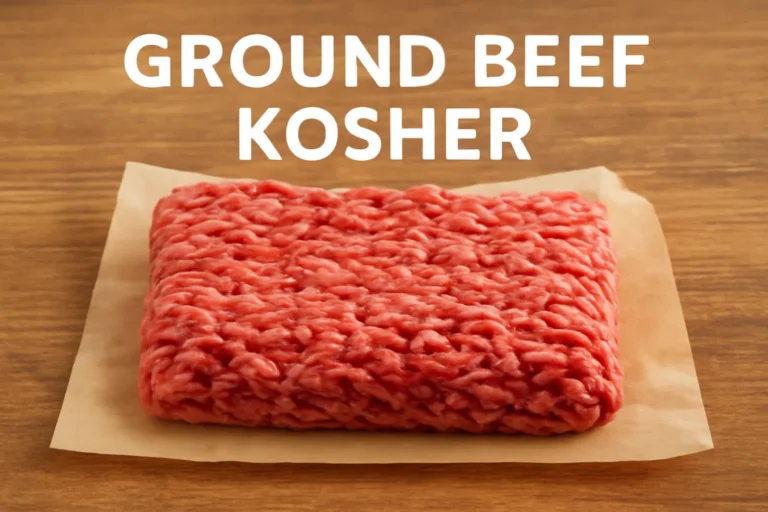
When people talk about kosher hamburger meat, they are usually referring to
ground beef that has been prepared and supervised in accordance with Jewish dietary laws.
This means that the meat comes from an animal that was slaughtered in a specific, humane way
(shechita) and that the processing, packaging, and labeling carry a reliable hechsher
or kosher certification. The result is a product that not only meets religious standards but
often aligns with careful food-safety practices that many home cooks appreciate.
The idea of kosher ground beef or kosher beef patties spans a spectrum
of options, from factory-ground Kosher for Passover varieties (seasoned with special rules)
to standard year-round glatt kosher hamburger meat that is ground and formed under strict
supervision. In everyday kitchens, you will encounter terms like kosher hamburger mince, kosher ground chuck, and kosher hamburger patties—all of which point
to the same core idea: the meat is certified and prepared with adherence to kosher laws.
This article will walk you through how to buy high-quality kosher ground beef, how to store it safely at home, and how to cook it into perfect patties. We’ll use a variety
of phrases so you can recognize the same product described in different ways, whether you shop at a
kosher butcher, a mainstream grocer with a strong hechsher, or an online retailer.
Key terms to know
Hechsher: a kosher certification symbol indicating the product meets rabbinic standards.
Glatt kosher: a stricter form of kosher meat with extra supervision on the lungs and trimming.
Shechita: the humane ritual slaughter process prescribed by Jewish law.
Basar or beaf (in various spellings): meat; when paired with dairy in kosher kitchens, the rules of separation apply.
Basar be-chalav and meat-dairy separation: the fundamental rule in kosher kitchens that meat and dairy do not mix.
Where to Buy Kosher Hamburger Meat
The first step to excellent kosher hamburger meat is choosing a reliable source. You want meat
that is fresh, properly labeled, and supervised by a reputable organization. Your options include
a kosher butcher, a supermarket with a strong hechsher, or a trusted online supplier that provides
detailed meat specifications and certification documents.
Reputable hechsher: Look for a widely recognized certification symbol on the packaging or on the butcher’s board.
Clear labeling: The package should indicate the cut, the grade (if applicable), the fat content range, and the origin.
Traceability: The ability to trace the product back to a known supplier or plant is a good sign of practice and safety.
Consistency: For patties, you want consistent grind size and texture across packages.
Types of kosher hamburger meat you may encounter
Kosher ground beef (often labeled simply as “ground beef” with a hechsher).
Glatt kosher hamburger meat or glatt kosher ground beef, a more strictly supervised option.
Kosher ground chuck or kosher ground sirloin, sometimes mixed to achieve better flavor and fat content.
Pre-formed kosher hamburger patties, ready-to-curger style patties that come in packaging with a hechsher.
Kashered or specially prepared patties, which may be seasoned or prepared for specific dishes or holidays.
Shopping tips for online and in-person purchases
Ask for the certification details and the name of the certifying agency. If you see a symbol you don’t recognize,
look it up to confirm its credibility.
Check the sell-by date and the freeze-by date if you’re buying frozen; freshness matters for texture and flavor.
Consider fat content when choosing ground beef for burgers; a typical, crowd-pleasing ratio is around 80/20 (meat/fat).
If you’re unsure about the grind size, ask your butcher to provide a uniform particle size suitable for burgers or request a grind that matches your preferred texture.
How to Choose Kosher Ground Beef for Patties
The quality of kosher hamburger mince or kosher ground beef hinges on several factors, from the fat-to-meat ratio
to the grind size and handling. Below are practical guidelines to help you select the right product for your patties.
Fat content and grind texture
80/20 (80% lean, 20% fat) is a common choice for juicy, flavorful burgers. If you prefer leaner burgers, you can use 85/15 or 90/10, but be prepared for a drier patty.
For more tenderness, choose a fine grind; for more robust bite and bark-like sear, a slightly coarser grind can work well.
When buying kosher ground beef, ask whether the meat was ground once (freshly ground) or twice (double-ground). Twice-ground meat tends to be smoother, while once-ground may retain more texture.
Origin and animal welfare considerations
Check the source animal’s breed and feed if disclosed. Some shoppers prefer beef from cattle raised on pasture or fed with controlled diets, though this varies by region and supplier.
Understand the implications of glatt kosher status. This can influence trimming standards and the level of supervision the meat has received.
Prepping for burgers: handling and prep tips
Keep ground beef cold. Remove it from the fridge only when you’re ready to shape patties.
Avoid overworking the meat. Gentle handling yields juicier burgers; overworking can lead to dense, compact patties.
Season with salt and a few aromatics just before cooking. If you mix in wet ingredients (like eggs), you are essentially forming a binder—see our cooking section for guidance on binders.
Storage and Handling of Kosher Hamburger Meat at Home
Proper storage protects flavor, texture, and safety. Whether you are starting with kosher ground beef, kosher beef patties, or kosher ground chuck, the fundamentals are the same.
Short-term storage
Refrigerate promptly at or below 40°F (4°C). Use within 1–2 days for fresh ground beef or patties.
Keep the product in its original packaging if possible, or transfer to a clean, airtight container to prevent odor transfer and moisture loss.
Avoid stacking heavy items on top of meat; excessive pressure can alter texture.
Long-term storage and freezing
For longer storage, freeze Kosher hamburger meat in portions that fit your typical meal size.
Wrap tightly in plastic wrap or aluminum foil, then place in a freezer bag to prevent freezer burn. Label with date and contents.
Freeze up to 3–4 months for best quality. Thaw in the refrigerator overnight for even, safe defrosting. Do not thaw on the counter.
Repacking and labeling considerations
When freezing patties, consider pre-forming them into even-sized discs so they cook evenly after thawing.
Label each package with its contents and the certification if you are maintaining a kosher kitchen with separate dairy and meat pieces.
Cross-contamination precautions
Use separate cutting boards, knives, and utensils for meat and dairy, as required by kosher practice.
Always wash hands, surfaces, and tools after handling raw meat and before touching other foods.
Store raw meat away from ready-to-eat foods to minimize risk of cross-contact.
Cooking kosher meat patties requires attention to temperature, moisture, and searing. Whether you want kosher hamburger patties for a backyard grill, a stovetop skillet, or an oven-broil setup, this section covers reliable techniques to maximize flavor and juiciness.
Grilling over medium-high heat yields a classic crust and smoky aroma. Keep the lid closed for even cooking and to preserve moisture.
Skillet sear on a heavy pan (cast iron is ideal) gives a deep crust where the Maillard reaction thrives. A touch of oil helps non-stick and flavor development.
Broiling in the oven is a convenient alternative when outdoor cooking isn’t possible. Move patties to the top rack for a quick, high-heat finish.
Internal temperature and doneness
Ground beef, including kosher ground beef and its variants, should reach an internal temperature of 160°F (71°C) for safety.
Use a reliable food thermometer to check the center of the patty. Insert the thermometer stem into the thickest part without touching the grill or pan.
For a juicier bite, some home cooks prefer to pull the patties at about 155°F (68°C) and let carryover heat finish cooking; however, this is not the standard safety recommendation and is not advised if you must strictly adhere to the 160°F guideline.
Seasoning, binders, and flavor builders
Keep seasonings simple: kosher salt and fresh ground pepper are classic. You can add garlic powder, onion powder, paprika, or dried herbs for depth.
Binders are optional. If you want a firmer patty, you can mix in a small amount of breadcrumbs or a single whisked egg. If you’re keeping the dish strictly pareve or dairy-free, the egg is a dairy-free binder if used sparingly, and some cooks prefer breadcrumbs as a binder(s). Always ensure any binder complies with your dietary guidelines.
When using glatt kosher meat, keep in mind that some cooks avoid extra binders to preserve the natural texture. If you do use binders, mix lightly to avoid dense patties.
Shaping patties for even cooking
Form patties that are slightly larger than the bun and about ¾ inch (2 cm) thick to account for shrinkage during cooking.
Make a shallow indent in the center of each patty to prevent bulging as it cooks.
Avoid overworking the meat; handling too much can make the patties dense.
Basting, toppings, and serving suggestions
Lightly oil the grill grates or pan for easier turning and a better crust.
You can add a touch of kosher cheese if you’re following a dairy-inclusive menu, but remember that meat and dairy cannot be combined in the same dish unless clearly separated according to your practice. If using cheese, ensure it has a kosher dairy certification and plan accordingly for a separate cooking phase.
Classic toppings include caramelized onions, pickles, tomato slices, lettuce, and condiments that complement the meat’s flavor without overwhelming it.
Special considerations for holiday or ceremonial meals
During certain Jewish holidays, cooks may choose specific taste profiles or preparations that align with tradition. In these cases, you might see kosher hamburger meat options that are seasoned or prepared to match traditional dishes.
Always use separate utensils and cookware when meat is involved, especially if dairy products are also in use in the kitchen.
Below are concise templates you can adapt for a weeknight dinner or a weekend barbecue. They leverage kosher ground beef and related products while keeping kosher-observant practices in mind.
Classic Kosher Hamburger Patties on the Grill
Preheat grill to medium-high heat.
Season kosher ground beef patties with salt and pepper, plus a pinch of garlic powder if desired.
Cook patties about 4–5 minutes per side for a medium-well finish, or longer for well-done, until the internal temperature reaches 160°F (71°C).
During the last minute, add cheese if using a dairy-containing topping, and toast the buns lightly on the grill.
Preheat a cast-iron skillet over medium-high heat with a light coat of oil.
Shape patties and season. Place in the hot pan and sear for 3–4 minutes per side.
Check for doneness with a thermometer to 160°F (71°C) and finish with your preferred toppings.
Make-Ahead Kosher Patties for a Crowd
Form patties in a uniform size and place on a tray lined with parchment.
Par-freeze for 1–2 hours, then wrap individually. This makes it easy to defrost and grill in batches.
Season just before cooking to preserve surface moisture and crust formation.
Is all ground beef kosher if it comes from a kosher source?
Not necessarily. Kosher ground beef must be prepared under kosher supervision, and the whole supply chain—from slaughter to grinding to packaging—must be supervised for the meat to be considered fully kosher. Always look for a recognized hechsher on the package and confirm that the grinding facility adheres to kosher standards.
Can I mix different kosher meats for patties?
Yes, you can blend different kosher beef cuts (such as chuck with brisket trim) to achieve a desired flavor and fat content. Ensure that the entire blend carries a reliable kosher certification and that the producer has adhered to proper processing standards.
What about frozen kosher hamburger meat?
Frozen kosher ground beef and kosher hamburger patties are common and convenient. Look for a clear freezing date, proper packaging, and a credible certification. When thawing, do so in the refrigerator to preserve texture and safety.
Yes. During Passover, many households use kosher for Passover ground beef and products prepared under stricter guidelines, with considerations about kitniyot and other dietary restrictions. If you observe Passover, follow your community’s guidance and rely on products specifically labeled for Passover to avoid dietary errors.
If you maintain a dedicated kosher kitchen, you’ll be mindful of separation rules, equipment
labeling, and careful route planning for meat and dairy. Here is a compact checklist to help you stay organized while preparing kosher hamburger meat dishes.
Maintain separate cutting boards, knives, and pans for meat and dairy, as per your practice.
Always verify the certification of meat products and ensure packaging remains intact until use.
Label leftovers and ensure that any prepared burgers that include dairy toppings or sauces are handled appropriately in meal planning.
Store ground beef and pre-formed patties in the coldest part of the refrigerator or freezer to maximize shelf life and flavor.
By following these best practices, you can achieve consistently excellent results with kosher hamburger meat, enjoying burgers that are flavorful, safe, and aligned with dietary observances. Whether you shop at a local kosher butcher or select a trusted kosher-certified package at the grocery store, the key is mindful selection, careful handling, and precise cooking.