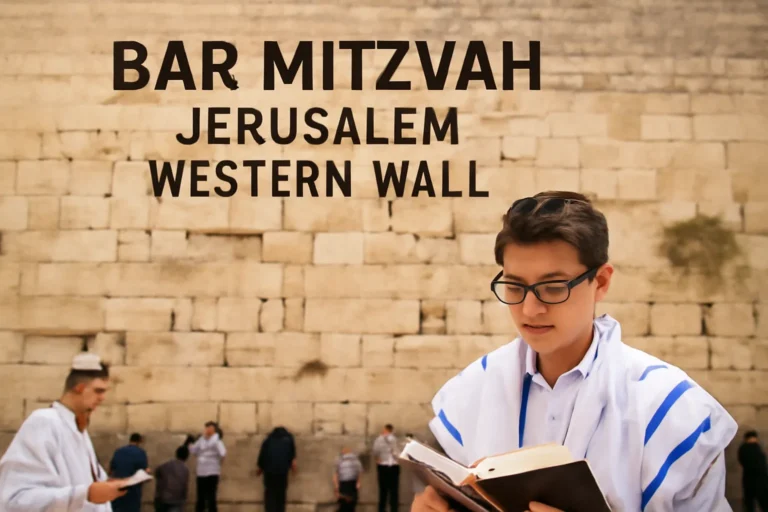
Introduction to Prayer at the Western Wall in Jerusalem
The Wailing Wall, known in Hebrew as the Kotel, stands as one of the most enduring symbols of Jerusalem and of Jewish prayer across the ages. The phrase prayer at the Western Wall evokes a moment when a person places a whispered petition, a personal hope, or a public plea into a centuries‑old stone. For many travelers, locals, and pilgrims, the idea of Jerusalem’s Wailing Wall prayers is inseparable from the city’s shared memory of the ancient temples and the long history of longing, lament, and renewal. In this article, we explore prayer at the Western Wall from multiple angles: its history, its practice, its rituals, and the lived experience of standing before the stones that have absorbed countless supplications.
The historical context of the Wailing Wall and the idea of sacred stone in Jerusalem
The Western Wall is more than a simple retaining wall; it is a fragment of the ancient esplanade that once surrounded a temple complex. Built during the late Second Temple period and rebuilt under Herod, the wall today is often described as the closest public space to the Sacred Spot on the Temple Mount for those who seek a tangible connection to a long and complex history. The phrase Western Wall prayer tradition then arises out of centuries of devotion, where individuals, communities, and scholars have imagined the wall as a conduit for communication with the divine.
Across generations, people have come to the Kotel with different hopes and different ways of speaking to God. Some come in quiet contemplation, others in fervent supplication, and many arrive with family, friends, or a group that seeks strength through shared ritual. In the broader arc of prayer wailing wall Jerusalem narratives, this site has become a universal stage for the human search for meaning, for healing, and for reconciliation with the past while looking toward the future.
The practice of prayer at the Western Wall: what it looks like and how it feels
When people speak of the practice of prayer at the Western Wall, they are often describing a blend of personal spirituality and communal ritual. The wall’s rough surface, the sense of time carried in its crevices, and the rhythm of steps along the plaza contribute to an atmosphere that many visitors describe as hushed yet alive with intention. The place invites both stillness and action: a moment of quiet reflection may be followed by a whispered prayer, a note placed into a crack, or the crossing of a significant threshold in one’s own life.
Visitors to the Wailing Wall prayers experience a spectrum of expressions. Some participants recite traditional texts from a prayer book, others recite psalms, and many simply speak in their own language, in short petitions that reflect personal circumstances—family health, peace in the world, gratitude for blessings, or a request for guidance in times of uncertainty. It is common to observe people in different postures: standing with hands upon the stones, leaning close to listen as if the wall might echo back a reply, or wrapping themselves in quiet devotion while tears or smiles surface in response to what they feel in the moment.
Daily life of a pilgrim or local who comes to the wall for prayer
The rhythm of prayer at the Western Wall can be described as a series of small, intimate acts that accumulate over time. You might begin with a moment of reverence, move to a personal declaration or a recitation from a siddur (prayer book), and then, if you wish, write a brief supplication and insert a note into a crack of the stones. Many participants take a moment to reflect on the history surrounding them—how generations of prayers live on in the air of this place—and then proceed to the next stage of their day changed in some subtle way.
For some, the wall is a place of endurance—where sorrow can find a voice, and where hope might endure despite uncertainty. For others, it becomes a focal point for gratitude: the ability to bear witness to a long lineage of prayers, to feel part of a continuing story, and to recognize that the act of coming to this site is in itself meaningful.
Common purposes and types of prayers heard at the Wall
Personal petitions for healing, protection, success, or guidance.
Family prayers for children, grandchildren, spouses, or parents.
Thanksgiving and gratitude for answered prayers or daily blessings.
Yearning for peace in times of conflict or social upheaval.
Remembrance of loved ones and the ancient losses that accompany them.
The Jerusalem prayer experience at the Wailing Wall often includes a sense of outwardness—people are surrounded by others who are also praying, yet the inner life feels intensely personal. This juxtaposition—public observance and private supplication—defines a significant portion of the experience of prayer wailing wall Jerusalem.
The rituals and customs that shape prayer at the Kotel
While the wall is a single physical object, the behavior around it is shaped by a blend of tradition, modern practice, and the particular circumstances of the day. The Western Wall prayer rituals are not unitary; instead, they reflect a spectrum of expressions that accommodate various religious sensibilities, languages, and cultures.
Ritual actions commonly observed around the wall
Approach and reverence as a first gesture, often with a moment of silence or a whispered prayer.
Touch or kiss the stones as a tactile expression of connection to the ancient site.
Recitation of psalms and prayers from a siddur, with some words spoken aloud and others heard as a private murmur.
Placing notes in the crevices seeking the wall’s blessing or intervention for a particular request.
Wrapping tefillin or wearing tallit for men, and various personal expressions of devotion by others according to custom.
The wall remains a living monument to both continuity and change: the practice of prayer at the Western Wall has adapted to a modern world while preserving ancient aspirations, and it continues to attract people who seek a direct line, as they feel it, to the divine through this historic stone.
Etiquette, accessibility, and practical guidelines for visitors
Visiting the Kotel is an experience that blends travel logistics with spiritual sensitivity. To ensure that everyone can participate with respect and dignity, it is helpful to consider some practical guidelines. These rules of etiquette are not just bureaucratic; they reflect the shared understanding of a sacred space where countless prayers have been offered.
Dress modestly to show respect for the site and its traditions. For many, this means covering shoulders and knees.
Avoid loud conversations, boisterous behavior, or disruptive photography while others are praying.
Observe the mechitzah or separate sections where applicable, recognizing that men and women may pray in different spaces at certain times or configurations.
When photographing, be discreet and sensitive to people who may be in the middle of prayer or personal reflection.
Practical tips for the wall experience
Bring a small note or slip of paper if you wish to leave a prayer, but do not place any personal belongings or coins into the crevices.
Respect the pace of others; there is no time limit to a personal prayer, but the wall can host many visitors who come and go throughout the day.
Be mindful of the needs of the local community who maintain and oversee the site, and follow posted guidelines and directions from staff or volunteers.
If you are new to this experience, consider starting with a moment of reflection away from the crowd to gather your thoughts before approaching the stones.
Accessibility considerations
The Western Wall area is a crowded, historic site with uneven surfaces in places. It is accessible to many visitors, but those with mobility challenges may need to plan ahead for accessible routes or alternative viewpoints. The experience, though it can be intense, remains open to people of diverse backgrounds who wish to observe or participate in a respectful manner.
The experience of the wall: sensory, emotional, and spiritual dimensions
The act of engaging with the prayer at the Western Wall is as much about sensation as it is about words. The roughness of the stones, the warmth of the sun on the plaza, the echoes of footsteps, and the murmured voices of people from many languages all blend into a unique atmosphere. For some, the experience is profoundly quiet and solitary; for others, the wall becomes part of a larger procession of faith, memory, and hope, with neighbors, strangers, and pilgrims sharing a moment in time.
The wall also invites contemplation about the resilience of communities and the ways in which faith persists through hardship. Many travelers report being moved by the sense that generations of prayers—whether spoken in Hebrew, Arabic, English, French, Amharic, Yiddish, or other languages—are held together in one space, a palimpsest of longing and aspiration that transcends spoken words.
Global significance: how the Wailing Wall resonates beyond Jerusalem
The Western Wall prayer space has become a symbol not only for a particular people in a particular city, but for a broader human impulse: to seek guidance, comfort, and meaning in the presence of history. The practice of Jerusalem prayer at the wall has inspired countless writings, studies, and conversations about prayer, memory, and nationhood. For people who cannot visit in person, images, stories, and virtual tours keep the memory of the site alive and invite a sense of shared humanity.
Words, notes, and the ritual of leaving prayers at the wall
A distinctive aspect of the prayer wailing wall Jerusalem experience is the tradition of leaving written prayers in the crevices of the stones. This act—often described as placing a personal supplication into the wall—has become a powerful symbol of faith in action: a tiny, crafted plea that remains within the wall’s ancient pores, ready to be remembered in days to come. While many notes are merely personal, some express hope for family health, for peace in the land, or gratitude for answered prayers. The practice is not exclusive to a single tradition; it has become part of a shared cultural ritual that reaches beyond linguistic or religious boundaries.
It is worth noting that the exact content of these notes is private to the writer and to God, and not every note is retrieved or read. The wall thus functions as a silent archive of human longing, a place where the material and the spiritual meet in a way that invites humility and reflection.
A guide to variations in phrasing: different ways to discuss this sacred site
When talking about this topic, different readers and speakers may use a variety of phrases. Here are some variations that you might encounter, all referring to the same core phenomenon of prayer in the vicinity of a monumental ancient wall in Jerusalem:
Prayer at the Western Wall as a personal conversation with the divine, in a place of deep history.
Wailing Wall prayers that express longing, hope, and gratitude in a public, iconic setting.
Jerusalem’s Kotel prayer experience as a bridge between ancient memory and contemporary life.
Western Wall prayer rituals that blend traditional texts with spontaneous, heartfelt supplications.
Prayers near the ancient stones that become a shared practice across cultures and languages.
Praying at the Kotel in Jerusalem, a phrase that travelers and locals alike use to describe a moment of reverent encounter.
Practical information for visitors: planning a meaningful visit to the wall
If you are planning a visit focused on prayer at the Wailing Wall, a few practical considerations can help you prepare for a meaningful experience. While the site is accessible to many, it remains a place where history and faith intersect in complex ways. Being mindful of the environment helps ensure that your visit respects the needs of others who are there to pray, study, or reflect.
What to bring and what to leave behind
Bring a small, respectful note if you wish to leave a prayer in the wall; ensure it contains no identifying personal information that you are not comfortable sharing publicly.
Leave behind distractions such as loud devices or large bags; carry only what you need for a focused, contemplative moment.
Carry yourself with dignity and pace that allows others to proceed respectfully.
Best times to visit and crowd considerations
Early mornings or late afternoons can be less crowded, offering a quieter setting for personal prayer.
During holydays and special occasions, the plaza may be busier, with more ceremonial activity and a heightened sense of communal prayer.
Weekdays tend to be less crowded than peak holiday periods, though the wall remains a constant focal point for prayer and reflection.
Reflection: the Western Wall as a site of memory, faith, and community
Beyond its role as a destination for prayer at the Western Wall, the site is a place where memory and faith meet community. Visitors often describe a sense of belonging to something larger than themselves, a link to millions of prayers that have stood the test of time. In the simple act of standing before the wall, or placing a note within its crevices, individuals may discover a moment of clarity, resolve, or reconciliation. The experience can be deeply personal, yet the shared space reminds us that many people in many languages are engaged in similar acts of supplication, gratitude, and hope.
Concluding thoughts on the enduring resonance of prayer wailing wall Jerusalem
The experience of prayer at the Western Wall offers more than a brief visit to a landmark. It provides a lens through which to view the enduring power of prayer, the ways communities reaffirm faith across generations, and the manner in which sacred spaces shape personal narratives. Whether you come with a sense of awe, with questions, or with a quiet intention to listen to your own heart, the wall invites you to participate in an ancient practice that remains vibrant in the modern city of Jerusalem. The Kotel continues to speak in the language of stone and time, inviting each visitor to bring their own language of prayer to this shared ground.
Additional notes for readers exploring the topic further
If your interest lies in the broader question of how sacred sites function as spaces for community, memory, and personal transformation, consider exploring these themes:
The relationship between historical monuments and contemporary religious life in Jerusalem.
The ways in which public spaces support private acts of prayer and introspection.
Comparative studies of ritual practices at other sacred walls or prayer spaces around the world.
The role of hospitality, dialogue, and mutual respect in multi-faith contexts surrounding holy sites.
Whether you are drawn to this topic for academic interest, personal devotion, or cultural curiosity, the Western Wall offers a durable, living example of how people seek meaning at the intersection of history and hope. The prayer wailing wall Jerusalem narrative is not only about the stones themselves but about the many voices—silence, whispers, songs, and prayers—that continue to resonate in this remarkable city.