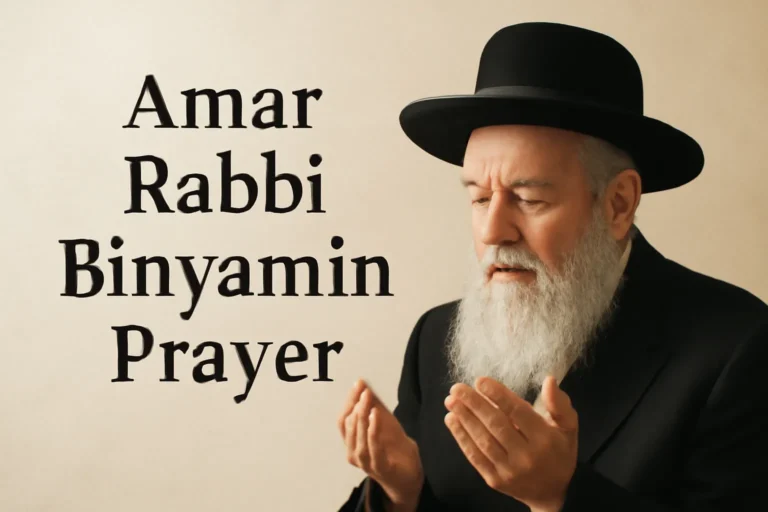
This article offers a comprehensive exploration of the Rabbi Meir Baal Haness Prayer, a devotion that sits at the intersection of tradition, healing, and community prayer. While many worshippers recognize the practice as the Mi Shebeirach for healing and well-being, a broader reading reveals how different communities adapt, name, and contextualize this blessing. The guide below, written in clear, accessible English, also reflects the Spanish subtitle that inspires the project: Guía Completa para Rezar, Oraciones y Significado. Through historical background, practical steps, and nuanced interpretations, readers will gain a fuller sense of how this petition operates within personal devotion and communal liturgy.
The figure known as Rabbi Meir Baal Haness—sometimes rendered as Meir Baal HaNes or Meir the Miracle Worker—is one of the most celebrated Tannaitic sages in Jewish memory. While vast legends surround his life and miracles, the prayer often associated with him serves as a conduit for requesting divine mercy, healing, and protection. In many synagogues and households, reciting a Mi Shebeirach for the sick is a central act, whether performed by a professional rabbi, a family member, or the congregation as a whole. In practice, the prayer is frequently linked to the lore of Rabbi Meir because the rabbi’s legend emphasizes compassion, miracles, and intercession on behalf of those who suffer.
Historical and liturgical context
Who was Rabbi Meir Baal Haness?
Rabbi Meir Baal Haness is revered in Jewish tradition as a sage who performed miracles and offered aid to those in distress. Across generations, stories of his mercy—especially for the sick and the powerless—have become a source of inspiration for those who seek practical prayers that name others by petition and recognize divine kindness. The historical record blends rabbinic attribution with midrashic and legendary material, creating a character whose memory is woven into a multitude of prayers and rituals.
The origin and purpose of the prayer tied to his name
The prayer associated with Rabbi Meir Baal Haness—often referred to in practice as a Mi Shebeirach—serves several purposes:
To articulate the needs of the ill and those facing hardship, calling on God’s mercy.
To affirm the power of community in healing, as the person’s name is often recited aloud for communal blessing.
To connect the present moment with the timeless stories of mercy attributed to Rabbi Meir, thereby fostering a sense of continuity with tradition.
Common prayers and variations: a survey
Across Jewish communities, the Mi Shebeirach for healing has several well-known variations. These variations reflect linguistic preferences (Hebrew, English, or bilingual forms), liturgical customs (Ashkenazi, Sephardi, Mizrahi), and local adaptations (during Shabbat, weekdays, or holidays). Below are representative forms and how they differ, with emphasis on semantic breadth rather than exact liturgical wording.
Classic Ashkenazi form (general healing)
In many Ashkenazi contexts, the healing blessing is invoked with a cadence that asks God to grant a srefuah sheleima—a complete cure—for the sick person and resilience for their body and spirit. A typical, paraphrased outline includes naming the patient (when appropriate), asking for healing, strength, and relief from suffering, and concluding with a note of gratitude.
Sephardi and Mizrahi variants
Sephardic and Mizrahi communities often infuse the blessing with distinct linguistic flavor, drawing on classical prayers, phrases in Hebrew and Arabic-influenced Hebrew, and the naming of God’s mercies in a tone that mirrors their own liturgical repertoire. The essential goal remains the same: to present a heartfelt petition for healing and solace, with a background of communal solidarity.
A widely practiced variation is to recite a personal Mi Shebeirach, which includes the name of the person in need and sometimes a short description of their condition. This form strengthens the sense of communal care and makes the request concrete. It is common to offer this recitation by the patient’s family, a friend, or the prayer leader, and to conclude with an appeal for strength and comfort for caregivers and loved ones as well.
Special cases: children, women in labor, and times of danger
Some communities develop targeted variations to address specific groups. For example, there are versions tailored for children, another for women in labor, and even prayers intended for times of danger, such as illness outbreaks or personal crisis. Although each version uses slightly different language, the underlying intention is to invoke the same spiritual energy: healing, protection, and relief from pain.
Structure and meaning: breaking down the prayer
The opening blessing and invocation
A typical Mi Shebeirach begins with a formal address to God and a recognition of divine mercy. The opening sections establish the prayer’s moral frame: compassion, healing, and the belief that healing can be both physical and spiritual. The phraseology often situates the petitioner within a lineage of ancestors and righteous figures to whom blessings are owed.
The central petition: healing, health, and wholeness
The core petitions request a refuah (healing), a return to strength, an easing of pain, and the restoration of normal life. Some versions explicitly ask for restoration of bodily functions, others emphasize renewed vitality, comfort from suffering, and mental clarity. The central idea is the restoration of wellness in a way that preserves dignity and hope.
The closing and expressions of gratitude
Most versions close with phrases that acknowledge God’s mercy and invite ongoing protection and blessing for the patient, as well as for the family and caretakers. The closing language often expresses gratitude for the possibility of healing and for the presence of the community’s support. This final segment reinforces the practical and spiritual dimensions of healing as a communal project.
How to recite the prayer: a practical guide
Whether you are saying the Mi Shebeirach aloud in a minyan or privately in your home, certain steps help deepen focus and intention. The following guide reflects a range of practice while highlighting universal principles.
Set intention: Before beginning, take a moment to center yourself. Reflect on the person for whom you are praying and consider what healing or support means in their context.
Choose the form: Decide whether you will recite a standard communal formulation, a personal Mi Shebeirach with the individual’s name, or a variation appropriate to the occasion.
Name and consent: If you are naming a person, ensure you have permission from the person or their family. Privacy and sensitivity are central to respectful prayer.
Time and place: In a synagogue, the Mi Shebeirach is often recited during the Torah service or amid the amidah, depending on tradition. At home, you can recite it at any quiet moment, ideally within a prayerful frame.
Use language that resonates: You may use Hebrew phrases, English, or a bilingual form. The important thing is that the language conveys your sincere petition and empathy.
Conclude with support: Consider adding a closing line that expresses gratitude for the community’s care and for any signs of recovery or resilience.
Practical tips for different communities
Different communities have distinct customs, but a few universal tips help ensure that the practice remains meaningful:
Consistency: Regular recitation fosters a sense of ongoing care and connection, especially for families facing long illnesses.
Respect for names: When including names, maintain the dignity of the person and avoid sharing beyond what is necessary in public contexts.
Customization: Feel free to adapt the wording to reflect personal or communal experiences, including adding intentions for caregivers and medical professionals.
Balance with other prayers: Combine healing petitions with prayers for peace, strength, and comfort, recognizing the multifaceted nature of healing.
Meaning and interpretation: what the prayer communicates beyond words
The Mi Shebeirach for healing is more than a plea for relief from pain. It is a statement about how a community relates to suffering, and how faith frames the process of healing. Three themes recur across variations:
Communal intercession: The act of praying publicly with the name of another person signals that healing is not only a private matter but a collective responsibility. The community’s voice becomes part of the petition.
Divine mercy and agency: The prayer rests on the conviction that mercy is a real attribute of God and that human beings exercise agency by asking for connection, courage, and support in the face of illness.
Holistic healing: Healing is pictured not only as physical recovery but as emotional, spiritual, and social restoration—returning to meaningful life, work, and relationships.
The connection to Rabbi Meir Baal Haness grounds the practice in a tradition of miraculous intervention and compassionate action. This association invites worshippers to approach healing as an activity that blends faith with practical care—attention to medical treatment, family support, and moral strength. The prayer thus serves as a bridge between the sacred and the everyday.
Practical considerations: privacy, names, and dignity
While the practice of reciting names during the Mi Shebeirach is powerful, it must be balanced with sensitivity to privacy, especially in shared spaces or public events. Here are considerations to keep in mind:
Consent and anonymity: If the patient or their family prefers, you can use limiting language that conveys the person’s needs without naming them publicly.
Accuracy: Ensure that names and facts are correct, to avoid confusion or hurt to those involved.
Context: In some communities, it is customary to lend voice to a broader petition for all the sick rather than naming individuals in every case.
Intent: The most important aspect is sincere intention—an earnest wish for healing, comfort, and dignity.
Textual variations and sample paraphrases
To support readers who wish to study or practice in diverse contexts, here are several representative paraphrased forms and ideas you can adapt. The goal is to capture the sense of the prayer while letting you maintain your own voice and language.
Paraphrase A: communal healing focus
May the One who is full of mercy uplift our brother or sister in need. May healing return strength to their body, clarity to their mind, and courage to their heart. May the community support them with care, and may they feel renewed, embraced by the warmth of our prayers and the hands of those who love them.
Paraphrase B: named-person emphasis
We lift up [Name] before You, asking for complete healing. Please grant them relief from pain, restore their health, and sustain their family with patience and hope. Let the medical efforts be guided by wisdom, compassion, and skill, and let them know that they are not alone.
Paraphrase C: infant and maternal care focus
For mothers who bear new life, for infants in distress, and for families facing uncertainty, we beseech Your mercy. Provide strength to mothers, healing to infants, and the reassurance that love and community stand with them during every moment of vulnerability.
Frequently asked questions (FAQ)
Is this prayer appropriate for occasions outside the synagogue?
Yes. Many families recite the Mi Shebeirach at home or during small gatherings to support loved ones. The practice is flexible and can be adapted to personal rituals, hospital visits, or quiet moments of contemplation.
Can I recite the Mi Shebeirach for more than one person?
Absolutely. You can name multiple individuals in a single petition or alternate among them in successive recitations. Just be mindful of the emotional weight and maintain a steady, respectful pace.
What about including non-illness requests in the same prayer?
Some variants expand the prayer to include requests for peace, comfort for mourners, recovery from stress, or spiritual growth. If your intention broadens beyond healing, you may structure the language to cover physical, emotional, and spiritual wellbeing.
Conclusion: the meaning of praying with Rabbi Meir Baal Haness as a guide
The Rabbi Meir Baal Haness Prayer—in its many forms—offers a powerful way to translate compassion into action. It invites the individual to speak truth about pain and hope, while inviting the community to bear one another’s burdens. The figure of Rabbi Meir HaNess provides a narrative of mercy and miraculous possibility that inspires trust in the transformative power of prayer. Whether recited in a formal service, in a quiet room at home, or at a bedside with a beloved child or parent, the Mi Shebeirach remains a dynamic living tradition: a prayer that evolves with language, culture, and circumstance while remaining anchored in the timeless promise of care, healing, and communal solidarity.
In sum, this guide has offered a broad, practical, and thoughtful look at the Rabbi Meir Baal Haness Prayer and its variations. By understanding both the origins and the modern adaptations, readers can approach the practice with confidence and sensitivity. May your recitations be meaningful, your intentions clear, and your heart open to the healing power of community and faith.