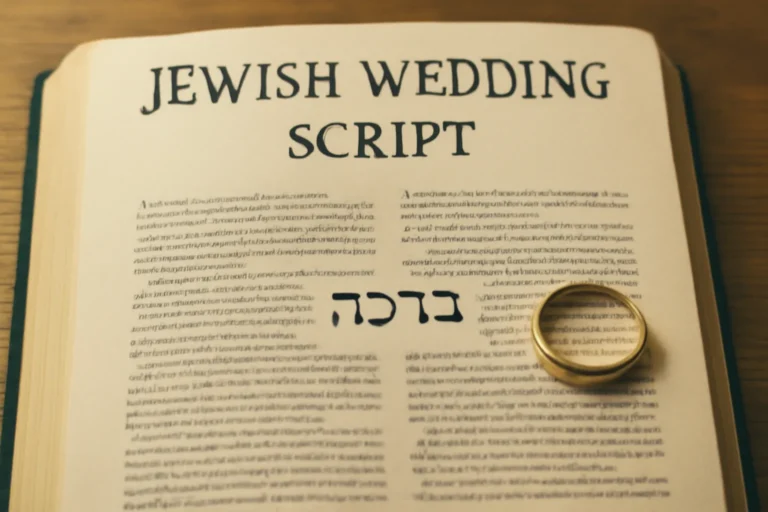
Simple Ketubah: a phrase that has become a movement in modern Jewish weddings. This article offers a comprehensive, minimalist guide to ketubah design that embraces restraint without sacrificing meaning or beauty. We will explore what makes a ketubah truly minimalist, how to communicate authenticity through typography and layout, and how to translate traditional text into a contemporary, elegant keepsake. Whether you are planning a ceremony at a gallery, a garden, or a synagogue, a plain ketubah or a clean ketubah can tell a powerful story with quiet confidence.
What two words can capture the essence of a simple ketubah?
In practice, the aesthetic often centers on simplicity and clarity. The core idea is that uncluttered design amplifies what the ketubah is: a binding document with spiritual and legal weight. The universal appeal of the minimalist ketubah lies in its ability to honor tradition while inviting a modern eye to linger on the text and craftsmanship rather than on decorative excess.
Historical context: why simplicity can be powerful
Ketubah design has long walked a line between text-first sanctity and decorative richness. Traditional ketubot are often lavish, with intricate borders, gold foil, and elaborate calligraphy. A spartan ketubah or a bare-bones ketubah can feel ironically timeless because it strips away noise and focuses attention on what matters: the couple, the promises, and the community that witnesses them. The modern minimalist ketubah approach respects history while reframing ornament as a purposeful complement to the text—not a substitute for it.
In recent years, couples have embraced low-key ketubah aesthetics when the wedding design leans toward contemporary aesthetics, sustainability, or a private family ritual. The goal is not to deprive the piece of beauty, but to ensure every element earns its place on the page. In our exploration of variation-rich simple ketubahs, you will discover how to harmonize typography, parchment, and layout into a coherent whole.
Principles of minimalist ketubah design
Typography as a primary voice
In a minimal ketubah, typefaces lead the composition. Consider a restrained pairing of a classic serif for the main body and a clean sans-serif for supporting information. The goal is legibility at common reading distances and from a distance for display purposes. When choosing typography, prioritize: contrast, proportion, and space.
Whitespace and structure
Whitespace is not emptiness; it is a deliberate decision to allow the text to breathe. A clean ketubah often uses generous margins and a simple grid. The architecture of the design—margins, line length, and alignment—must guide the eye to the essential content without shouting at it.
Material and surface
The choice of parchment, paper, or digital print emerges from the same design logic: texture and tone should support readability and longevity. Materials that are high-quality yet understated tend to age gracefully and remain legible for generations. A flat, unembellished finish can be just as luxurious as gilded details when paired with precise typography.
Color in a minimalist ketubah is often restrained. A neutral palette—creams, warm whites, soft grays—can be accented with a single, restrained hue for emphasis, such as a muted blue or charcoal. The color should never overpower the text, but it can give the piece a distinctive character, turning a plain ketubah into a cherished heirloom.
Layout and composition: building a timeless frame
Grid and alignment
A successful streamlined ketubah relies on a predictable grid. This framework supports balance between the main body of the text and any decorative motifs. Even when using a minimal border, the alignment should be exact, ensuring that lines of text run parallel to the edges and that the overall silhouette feels intentional.
Borders, motifs, and ornamentation
In minimalist designs, decorative elements are not left to chance. A simple ketubah might feature a discreet geometric border or a single repeating motif that echoes the couple’s personal symbolism. The principle is restraint: any ornament must serve the narrative or the aesthetic, not distract from the content. Think of a clean border that frames the text like a frame around a photograph—noticeable, but not overwhelming.
Proportions and readability
Line length, font size, and line height should support readability. A minimalist ketubah often uses slightly larger line height and comfortable margins so that the text is easy to read from typical display distances. This is especially important for weddings where guests may view the piece from across a room or in photos where close inspection will occur.
Content strategy: preserving meaning in a thin-eyed design
Wording choices: traditional vs. contemporary
Ketubah text exists on a spectrum. A simple ketubah design can accommodate traditional language in a revised type setting, or it can host a modern rewrite that speaks to the couple’s values. When selecting ketubah text, consider whether you want to preserve the conventional covenant language, replace it with contemporary vows, or offer a hybrid approach that honors heritage while reflecting personal beliefs.
Names, dates, and witnesses
Names and dates are essential, and a minimalist layout treats them with care. The order of information should be predictable, whether it’s the couple’s names in bold, the wedding date, and space reserved for signatures. A well-planned low-key ketubah keeps these critical items legible and gracefully integrated into the overall design.
Personalization without excess
Minimalism does not mean bland. A spartan ketubah can incorporate subtle personal touches—an initial, a small motif, or a favorite quote—presented in a way that does not overpower the main text. The collector’s mindset for a basically simple ketubah is that every ornament earns its keep.
Typography options: pairing voice and space
Primary typefaces
Consider a restrained pair such as a serif for body text and a sans-serif for headings or emphasis. The combination should feel cohesive, not contrived. For a minimal ketubah, contrast should be enough to differentiate sections without shouting across the page.
Emphasis and hierarchy
Bold, italic, or colored elements should be used sparingly. In a simple ketubah, emphasis might appear as a few bolded phrases within the main text, or as a small decorative initial at the beginning of sections. The result is a hierarchy that guides the reader without dominating the page.
Legibility in aging and display
Typography must age well. A clean ketubah design prioritizes crisp rendering, high contrast between text and background, and avoidance of overly thin strokes that could blur over time. If you anticipate archival framing or long-term display, test the chosen fonts against aging conditions.
A minimalist ketubah often uses a warm base with a restrained accent color to draw attention to a focal point—perhaps the couple’s names or a signature line. The accent color should not compete with the text; it should enhance legibility and emotional resonance.
Materials-driven color decisions
On vellum or warm-toned paper, certain ink colors can appear different than on bright white stock. A plain ketubah with a subtle ink, such as deep charcoal or midnight blue, may read as “quiet luxury.” Always request proofs on the actual substrate so you can see how color behaves in real conditions.
Case studies: where simplicity shines
Below are several conceptual profiles of simple ketubah projects to illustrate how variations of the simplest idea can yield distinct outcomes.
Minimalist border, modern script: A near-edge border with generous whitespace and a contemporary script for the couple’s names. The emphasis is on clarity and ceremony—an elegant statement of intent without excess decor.
Plain parchment with a single emblem: A muted, natural parchment surface paired with a small, symbolic motif—perhaps a tree or a geometric motif—placed in a corner to honor personal meaning while keeping the page visually quiet.
Two-tone design, restrained typography: A bifurcated color strategy with contrasting text blocks—body text in one tone, headings in another—producing a calm, scholarly feel.
Letterpress on muted stock: A tactile, text-first approach that uses depth and texture to convey luxury without ornament. The missing ornament is itself a design choice.
Practical steps to design a simple ketubah
Define goals: Decide whether the focus is on the text, the couple, or the moment of the vow. A low-key ketubah often centers the language and witnesses more than imagery.
Choose wording: Select traditional, modern, or hybrid language. Consider how changes in wording will affect line length and spacing.
Pick typography: Pair a readable serif with a complementary sans-serif. Ensure the chosen fonts render well at the final print size.
Decide on materials: Paper, parchment, ink color, and finishing techniques. If sustainability matters, ask about recycled or responsibly sourced materials.
Plan the layout: Create a grid, determine margins, borders, and the placement of key information (names, date, witnesses).
Draft your design: Produce a proof, either digitally or as a hand-drawn mock-up if you hire a calligrapher. In a minimal ketubah, the draft will reveal whether the text interacts gracefully with white space.
Proof and revise: Check for readability, alignment, and overall tone. Ensure the design reflects the couple’s identity while remaining accessible to guests with diverse backgrounds.
Finalize and print: Obtain a final proof from the printer or calligrapher, then proceed to production. A spartan ketubah should arrive with crisp lines and consistent inking.
Collaboration: how to work with designers and calligraphers
Choosing a partner
Look for professionals who demonstrate a track record in minimalist ketubah design and who can translate your language into typography and layout. Ask for portfolios that show a preference for bold restraint rather than ornate excess. Communication is essential: share references, color swatches, and sample texts early in the process.
Communication strategies
Provide a clear brief that emphasizes goals such as legibility, elegance, and the intended display context. If you want a plain ketubah, specify that you prefer negative space and a restrained iconography. If you want a low-key ketubah with meaningful symbolism, describe the symbols and their placement so that the designer can integrate them without crowding the page.
Legal and religious considerations
Although the design is primarily artistic, the ketubah remains a legal document in many communities. Ensure that the typography and layout comply with local requirements regarding legibility and readability. If you incorporate translations or non-traditional elements, confirm that the text remains valid and readable for witnesses and officiants.
A minimalist ketubah should be accessible to all guests, including those with visual impairment. Use high contrast between ink and paper, consider larger font sizes for critical lines, and provide alternative formats if needed for archival purposes.
Inclusive language
Design choices should support inclusive language when desired. A modern ketubah can honor diverse family structures and beliefs while maintaining a clean, elegant aesthetic.
Framing and display considerations
When choosing a frame, select a style that complements the design without overpowering it. A simple unsaturated frame or a minimalist floating frame often works well with a minimal ketubah. The display should invite close reading rather than compete with the surroundings.
Carefully stored ketubot can last for generations. For a simple ketubah, choose a protective sleeve and acid-free backing if you plan to keep it in a binder or display case. Avoid exposure to direct sunlight for long periods to prevent fading of ink and parchment.
Documentation and provenance
Maintain documentation about the design process, including the font selections, material choices, and any signatures from the designer or calligrapher. A plain ketubah with a documented lineage can become a cherished family heirloom that tells a story beyond the text.
Over time, wear can appear at folds or along edges. A uncluttered ketubah that was well-made is easier to repair because it relies on clean lines and consistent canvas. If restoration is needed, consult a professional conservator who understands the material and the intention behind the design.
Common mistakes and how to avoid them
Over-ornamentation: Adding motifs that do not align with the text can undermine the minimalist goal.
Poor typography choices: Incompatible typefaces or tiny font sizes hurt readability and longevity.
Inconsistent margins: Off-balance whitespace creates a noisy impression even when the content is simple.
Misalignment of key elements: Names, dates, or signatures should align to a predictable grid.
Inadequate contrast: Light ink on light paper or vice versa reduces accessibility and durability.
Variations on the theme: phrasing and semantic breadth
To broaden the semantic reach of your design, explore variations of the central idea: simple ketubah, minimalist ketubah, plain ketubah, uncluttered ketubah, clean ketubah, minimal ketubah, basic ketubah, low-key ketubah, streamlined ketubah, and spartan ketubah. Each variant signals a slightly different emphasis—whether the focus is on the mood (calm, contemplative), the process (handmade, artisanal), or the philosophy (less is more, essentials only). When you discuss your project with a designer, you can explicitly mention these terms to set expectations and invite a targeted outcome.
For example, you might describe your goals like this: a plain ketubah with a delicate, restrained border, or a minimalist ketubah that uses modern typography and ample white space to frame a traditional vow. A low-key ketubah could emphasize material texture and subtle symbolism, while a streamlined ketubah might pair a digital font with a traditional phrasing in a contemporary cadence. Regardless of the variant, the guiding principle remains: beauty through restraint.
In practice, a well-executed simple ketubah balances the textual weight with surface discipline. It invites interpretation without dictating it, and it endures as a document that feels both sacred and contemporary. The semantic breadth here is an invitation: to explore not just what a ketubah says, but how its visual discipline reflects the couple’s values and the ceremony’s tone.
Conclusion: embracing minimalism without sacrificing meaning
In the end, a simple ketubah or a minimalist ketubah is about focusing on essentials and letting the content lead the design. The plain ketubah approach avoids unnecessary embellishment while still conveying the gravity and joy of marriage. By prioritizing typography, whitespace, and a restrained color palette, you can craft a piece that feels timeless, dignified, and deeply personal. Whether you choose a clean ketubah with an understated border or a more text-forward layout with subtle ink choices, the aim remains the same: to preserve the vows, celebrate partnership, and present a document that will be treasured for generations to come.
As you embark on design choices for a wedding that favors minimalist design, remember that variation in phrasing and motif should serve the message, not overwhelm it. The simple ketubah is a modern tradition that honors ancient commitments by presenting them in an equally enduring and elegant form. May your ketubah stand as a clear, serene witness to the promises made and the future you will build together.