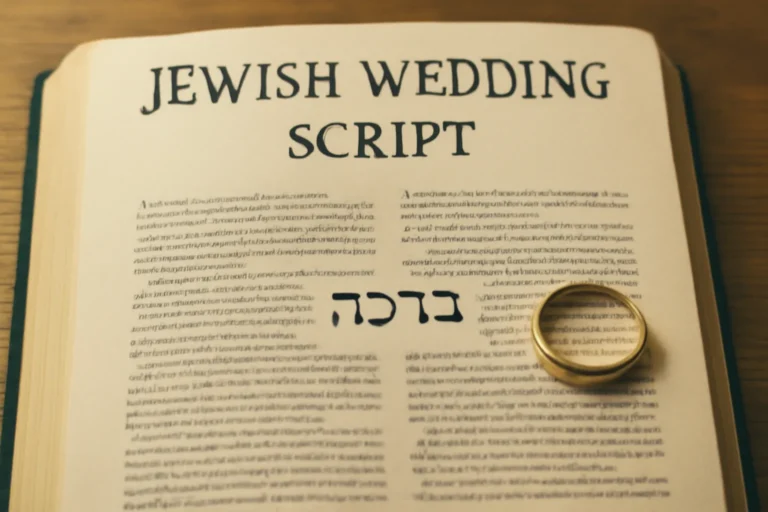
Overview: What is a Reform Jewish Wedding Ceremony?
A Reform Jewish wedding ceremony is a modern, personally meaningful expression of commitment that sits at the intersection of tradition and individual autonomy.
In Reform Judaism, weddings are seen as a sacred covenant that honors Jewish values such as justice, dignity, and growth, while also recognizing the diverse identities and beliefs of contemporary couples.
The ceremony style is often characterized by inclusivity, egalitarian leadership, and openness to adapt traditional elements to better reflect the couple’s priorities.
This guide uses a broad, practical approach to explain what a modern Reform wedding service might look like, how to plan it, and what it can mean for a couple, their families, and their communities.
You’ll find discussion of ritual components, the role of the officiant, how vows or rings are used, and how to incorporate readings, music, and symbolism in ways that honor both Jewish heritage and personal values.
Throughout this article, you’ll encounter variations of the Reform wedding ceremony, such as the flexible role of the rabbi, the optional inclusion of traditional elements, and the deliberate emphasis on meaning over form. This breadth reflects the movement’s commitment to making Jewish life accessible, relevant, and joyful for today’s couples.
Core Traditions in a Reform Jewish Wedding
Even within Reform practice, certain elements recur because they carry enduring symbolism: partnership, commitment, and the sanctification of daily life. The following subsections describe common components, while allowing room for customization.
Key Rituals and their flexible expressions
Chuppah under which the couple gathers for the ceremony—symbolizing the home they will build together. In Reform weddings, the chuppah is often placed in view of all guests, sometimes with the couple seated to reflect a shared leadership model.
Rings as a sign of vows, with some couples exchanging two rings or opting for a symbolic ring if a traditional model does not fit.
Ketubah (formation of the covenant) may be presented as a traditional document, a modern statement of mutual responsibilities, or a blended text reflecting both partners’ values. Some couples choose to sign a ketubah that emphasizes equality and partnership rather than a conventional betrothal style.
Bedeken (the veiling) is optional in Reform practice; many couples skip this moment or reinterpret it as a shared ritual about trust and transparency rather than a male protective custom.
Blessings over wine or a blessing over a glass of juice—an elegant, inclusive moment that marks the transition from single life to shared life.
Seven Blessings (Sheva Brachot) may be recited or adapted. In Reform settings, these blessings can be rewritten, substituted with contemporary readings, or replaced with a personal vow or a creative alternative that aligns with modern values.
The breaking of the glass is frequently optional in Reform ceremonies, chosen as a symbolic gesture that can represent the fragility of partnerships, memory, and joy. If included, it is often presented as a moment of reflection or a celebratory cue for guests.
Readings, poetry, or music—these can be drawn from Jewish liturgy, modern Jewish authors, or secular poets, reflecting the couple’s tastes and beliefs while connecting to broader themes like love, justice, and community.
How inclusion shapes the ceremony
Gender equality is typically central: both partners exchange rings, lead readings, and participate in decisions about ritual roles.
Interfaith and non-Jewish family participation is common and encouraged through inclusive language, open participation, and optional commitments to educate guests about Jewish traditions.
Same-sex couples commonly receive full officiant participation, with lineages of blessing and ritual tailored to the couple’s identities and families.
Practical notes about liturgy and personalization
Many Reform weddings favor inclusion and flexibility—you might find bilingual readings, secular music, or a modern, personalized blessing that aligns with the couple’s values.
Liturgical language often emphasizes mutual partnership and shared responsibility rather than a tradition-only script.
Rabbinic leadership in Reform practice is frequently collaborative, with a strong emphasis on the couple’s voice. The officiant may guide, but the couple, family members, and friends can contribute through readings, music, or family blessings.
Planning Your Reform Wedding: Steps, Timelines, and Checklists
Planning a Reform wedding combines logistical tasks with thoughtful decisions about meaning and community. The process is often as important as the ceremony itself, offering opportunities for engagement, education, and joint planning.
Initial decisions and early steps
Define your vision for the ceremony: intimate, formal, casual, spiritual, or secular-tinged, and how Jewish meaning will appear.
Choose the officiant (rabbi, cantor, or a non‑Rabbinic officiant familiar with Reform practice) who resonates with your values and approach to liturgy.
Decide on inclusivity and structure: Will you have two officiants? Will you include readings in other languages? Will you invite interfaith participants to give blessings or readings?
Select a venue that supports your goals—some couples prefer a synagogue or a temple space; others choose an outdoor or secular venue where a chuppah can be set up.
Set a budget and identify priorities: ceremony length, musicians or soloists, kallot or kallah roles, photography, and reception elements.
Timeline and milestone planning
12–18 months out: finalize the officiant, choose a venue, begin drafting a vision for the ceremony, start talking about readings and music.
9–12 months out: select ketubah text or design, decide on blessing structure, identify participants for readings, and begin selecting clergy or officiants.
6–9 months out: confirm legal requirements, ceremony script, and music pieces; begin working on the processional order and seating plans; plan the bedeken and chuppah setup if included.
3–4 months out: gather readings and translations, finalize vows or personal statements, confirm clergy roles, and arrange for rehearsal timing.
1–2 months out: obtain necessary permits, finalize guest accommodations, plan accessibility and inclusivity details, and confirm vendors.
Week of the wedding: run-through with the officiant and wedding party, confirm seating, finalize program notes, and ensure a smooth flow for the ceremony and reception.
Language and tone: choose whether the ceremony will be largely bilingual, fully in English, or include Hebrew phrases with translations.
Music and readings: decide whether to have instrumental introductions, musical interludes, or spoken word passages that reflect your tastes.
Seating and flow: plan where each participant will stand, where families sit, and how the couple will approach the chuppah together.
Symbolic decisions: decide on the form of the ketubah (text, design, and whether to involve guests in signing), and whether to include the glass-breaking moment.
Accessibility and inclusion: ensure large print programs, quiet spaces, and inclusive language that welcomes all families and guests.
Logistics for a smooth ceremony
Rings and vows: confirm order of exchanging rings, whether vows are spoken aloud or kept private, and who leads the ring ceremony.
Photographs: coordinate with the photographer to capture key moments without disrupting the flow of the ceremony.
Contingency planning: have a rain plan for outdoor sites and a back-up schedule for health or weather issues.
Community involvement: invite family members to participate in readings, blessings, or a communal welcome to guests.
Inclusion, Meaning, and Modern Values
A hallmark of Reform weddings is the attention to social and ethical dimensions—how the ceremony reflects values such as equality, justice, and responsibility to the world. This section explores how these ideals shape decisions before and during the wedding.
Reform wedding ceremonies are often crafted to honor both partners’ backgrounds, with language and symbolism that invite understanding from all guests. Practical approaches include:
Providing translations or summaries of Hebrew blessings and ritual actions.
Inviting partners and family members from varied religious or secular backgrounds to participate in readings or blessings.
Using a non-denominational or broadly Jewish framework for the ceremony language.
Ensuring that the ketubah or vow statements clearly express mutual commitment rather than unilateral expectations.
Equality, consent, and autonomy
In Reform practice, the ceremony emphasizes mutual consent and shared decision-making about all ritual elements. This reflects a broader commitment to gender equality, LGBTQ+ inclusion, and personal autonomy in spiritual life.
Meaningful ritual that honors tradition
The intent is not to replace Judaism with trendiness, but to reframe where appropriate and to enrich the couple’s connection to Jewish history, values, and community. Many couples use the ceremony to teach younger generations about what their heritage stands for today, including social justice, community responsibility, and the power of partnership.
Customization within a Reform Jewish Wedding Ceremony
The Reform movement encourages couples to customize their ceremony in ways that are personally meaningful while staying respectful toward Jewish tradition. Here are common avenues for customization.
Vows, rings, and commitments
Spoken vows can be a central feature, written to reflect shared goals and values beyond traditional phrasing.
Rings may be exchanged with both partners’ names inscribed or with a short, inclusive blessing recited at hand-off.
Couples may add a personal ring blessing or a community blessing that ties their pledges to family, friends, and future children.
Readings and music
Readings from Jewish poets, philosophers, or modern writers can complement traditional liturgy.
Music selections can blend Jewish melodies with contemporary songs chosen for their emotional resonance and thematic relevance.
Inclusive readings in multiple languages help guests connect with the ceremony, regardless of background.
Rituals and symbolism
Retaining or modifying the ketubah language to reflect equality and partnership; some couples opt for a modern text that speaks to shared life goals.
Adapting the bedeken or omitting it entirely, reframing the moment as a mutual exchange of trust rather than a traditional gendered rite.
Deciding whether to include the glass breaking or replace it with another moment of communal blessing.
Logistics: Venue, Rabbi, and Vendors
The practical side of planning a Reform wedding is as important as the ceremony itself. The following considerations help ensure that the day runs smoothly and remains true to your intentions.
Working with the officiant
Meet to align on the ceremony’s tone, pace, and language.
Discuss who will lead readings, blessings, or communal moments.
Coordinate rehearsal details to ensure all participants feel comfortable with their roles.
Venue and accessibility
Choose a venue with appropriate accessibility features and space for a chuppah and seating that honors all guests.
Confirm sound and seating arrangements so readings and music are audible to everyone.
Plan for inclusive signage and an accessible program format (large print, braille, or screen-readable formats if needed).
Vendors and coordination
Photographers and videographers: discuss moments to capture, such as the bedeken, the ring exchange, and the signing of the ketubah, if applicable.
Musicians and audio: coordinate processional orders, instrumental solos, and any live music during key ritual moments.
Doulas of ceremony planning (non-medical): some couples find an event planner helpful to manage the flow of the ceremony and reception.
Sample Ceremony Outline: A Flexible Framework for a Reform Jewish Wedding
The outline below presents a framework that is often adaptable for Reform weddings. It keeps traditional touchpoints while inviting personalization and inclusive language.
Prelude music and guests arrive; soft lighting to welcome a contemplative mood.
Processional begins with the wedding party; the couple may enter together or separately depending on preference.
Welcome and opening blessings by the officiant, with a short introduction and acknowledgement of families and guests.
Bedeken (optional) or a modern reimagining of mutual trust and consent.
Ketubah signing or presentation, including a brief explanation of its meaning for modern couples.
Chuppah ceremony with the couple under the canopy; readings, prayers, or blessings as decided.
Rings and vows exchange, followed by a communal blessing or a personal commitment.
Blessings over wine and any additional blessings or readings chosen by the couple.
Breaking the glass (optional) as a moment of shared memory and joy.
Concluding cmds or a final blessing, followed by recessional music and guests invited to celebrate the couple’s new life together.
This outline is intentionally adaptable. Some couples shorten or lengthen phases, substitute readings, or incorporate a social justice or community service moment immediately after the ceremony. The essential aim is to create a meaningful, intentional moment that reflects who you are as a couple and what you want your marriage to stand for.
Gifts, Traditions, and the Aftercare of the Ceremony
A Reform Jewish wedding often includes thoughtful practices that extend the ceremony’s impact beyond the couple’s vows. You might consider how to weave these elements into your celebration or post-wedding life.
Honoring guests and communities
Offer a brief explanation of Jewish symbols for guests who may be unfamiliar, creating an accessible and respectful experience for all.
Provide a meaningful moment for alight gestures such as a ceremonial toast that honors families and communities.
Consider a post‑ceremony ritual of congratulations or a community reception that reflects the couple’s shared values.
Continuing the celebration
Reception planning can echo the couple’s themes, such as social justice commitments, environmental stewardship (eco-friendly décor), or a charity moment in honor of guests’ contributions.
Include family and guests in post-wedding traditions, such as sharing stories about the couple or contributing to a collaborative memory book.
Ethical and spiritual legacy
Some couples choose to support causes aligned with their values as a wedding gift preference for guests.
Discuss with your officiant whether to embed a short blessing or dedication for the future that reflects a shared life arc and responsibility to the wider world.
Glossary and Quick Reference: Terms You Might Encounter
Ketubah: a Jewish marriage contract that outlines the couple’s commitments; in Reform weddings, it can be modernized to emphasize equality and mutual obligations.
Chuppah: the wedding canopy under which the couple stands, symbolizing the home they will build together.
Bedeken: the veiling ceremony; optional in Reform practice and often reinterpreted.
Sheva Brachot (Seven Blessings): blessings traditionally recited over wine, which can be adapted or replaced with contemporary readings.
Kiddush or blessing over wine: marks a sacred moment in the ceremony and can be included or customized.
Breaking the Glass: a symbolic gesture of joy and remembrance; optional in Reform ceremonies and sometimes reframed as a shared vow or memory.
Rings: the symbolic circles exchanged by partners, often with equal status and mutual consent emphasized.
Frequently Asked Questions about Reform Jewish Weddings
Can a Reform wedding be interfaith?
Yes. Reform Judaism is widely welcoming of interfaith couples. The ceremony can be designed to honor both spouses’ backgrounds, with inclusive language, dual traditions when desired, and education for guests who wish to learn more about Jewish customs.
Is a rabbi required for Reform weddings?
Not always. Some couples choose a rabbi as officiant, while others select a cantor, a trained lay leader, or a civil officiant who collaborates with a Jewish partner. The key is finding someone who shares your vision for the ceremony’s meaning and tone.
Reform weddings widely affirm LGBTQ+ couples and offer full ceremony participation, including blessings, vows, and ritual roles. The ceremony is designed to celebrate love and equality in a way that reflects contemporary Jewish values.
How flexible are the liturgical elements?
Extremely flexible. A Reform ceremony can keep traditional features, replace them with modern meanings, or omit certain elements altogether. The goal is to create a ceremony that feels authentic and personally significant for the couple.
Through readings, blessings, and shared rituals, couples often invite family and friends to participate in the ceremony in meaningful ways. This involvement strengthens communal bonds and deepens the sense of belonging for everyone present.
Closing Thoughts: Meaning, Joy, and Community
A Reform Jewish wedding is more than a single event—it is a milestone that can set the tone for a life of shared values, learning, and service. By blending cherished traditions with modern sensibilities, couples can craft a ceremony that honors the past while embracing the future.
Whether you call it a Reform wedding ceremony, a Reform Judaism wedding service, or a Jewish wedding in Reform tradition, the core purpose remains: to sanctify a public declaration of love in the presence of family, friends, and community, with a commitment to growth, justice, and mutual respect.