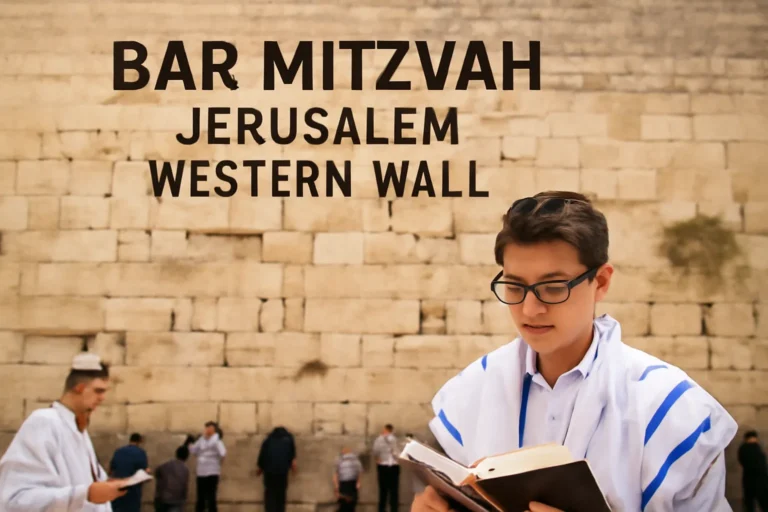
Bar Mitzvah: Jewish Coming-of-Age Ceremony for Boys at 13
The Bar Mitzvah is a fundamental Jewish rite of passage that celebrates a boy’s transition into religious and communal responsibility at the age of 13. This ceremony signifies that the individual is now accountable for observing Jewish commandments and participating fully in synagogue life. The event is both a spiritual milestone and a communal celebration, emphasizing the importance of Jewish education and tradition.
During the Bar Mitzvah, the young man typically reads from the Torah during a synagogue service, often for the first time, demonstrating his newfound maturity and understanding of Jewish laws and values. The occasion is marked by festive gatherings, prayers, and often a celebratory meal or party. This rite of passage underscores the importance of lifelong learning and active participation in Jewish community life, symbolizing the boy’s entry into Jewish adulthood and responsibility.
📊Profile
Hebrew name
Bar Mitzvah (בר מצווה), transliteration: Bar Mitzvah
Date in Hebrew calendar
13th of Nisan (approximate, varies annually)
Date in Gregorian calendar
Typically between ages 12-13, varies by individual
Duration
One day (main ceremony), with celebrations often lasting several hours or days
Type
Rabbinical
Category
Coming of Age
Torah portion
Aliyah (calling up to the Torah) for the boy
Key mitzvot
Reading from the Torah, leading prayer, fulfilling commandments
Symbolic foods
Challah bread, sweets, and festive foods
Greeting/phrase used
Mazal Tov!
📜History and Significance
Historical Context
The concept of a coming-of-age ceremony in Judaism dates back to ancient times, where reaching a certain age signified increased religious responsibilities. The Bar Mitzvah as a formalized event emerged in medieval Jewish communities, emphasizing the importance of Torah study and communal participation.
Spiritual Significance
The Bar Mitzvah symbolizes the transition from childhood to adulthood, where the individual is now responsible for observing commandments and contributing to Jewish life. It reflects the value placed on education, moral responsibility, and community engagement. Over centuries, this rite has evolved into a joyful celebration that reinforces Jewish identity and continuity.
Today, the Bar Mitzvah remains a central rite of passage in Jewish life worldwide. It combines religious duties with cultural festivities, fostering a sense of belonging and spiritual growth. The ceremony underscores the enduring importance of tradition, learning, and community in Jewish culture.
🕯️Traditions & Customs
Preparation and Learning
Before the Bar Mitzvah, the boy undergoes extensive Torah and Jewish law study, often with a teacher or rabbi. This preparation emphasizes the importance of education and spiritual growth in Jewish life.
The Ceremony
The core of the Bar Mitzvah is the boy’s aliyah, where he is called to recite a blessing and read a portion of the Torah during synagogue services. This act symbolizes his acceptance of religious responsibilities. In Ashkenazi communities, the boy often wears tefillin for the first time, while Sephardic traditions may include additional customs such as singing and dancing.
Celebrations
Following the religious service, families host celebrations that can range from modest gatherings to large parties. Guests often give gifts, and the event is marked by singing, dancing, and communal joy. In some traditions, a special cake or bread called challah is served, symbolizing the bread of the covenant.
Differences in Traditions
While the core elements remain consistent, Ashkenazi and Sephardic communities may differ in customs. For example, Sephardic families might incorporate additional prayers or rituals, and the style of celebration can vary widely based on cultural backgrounds. Nonetheless, the essence of the Bar Mitzvah as a spiritual milestone remains universal across Jewish communities.
In many communities, the boy’s Torah reading is followed by a speech or d’var Torah, where he shares insights or reflections on the portion.
🕯️
Some Jewish communities have a custom called ‘Seudat Mitzvah,’ a festive meal held in honor of the Bar Mitzvah, often with singing and dancing lasting into the night.