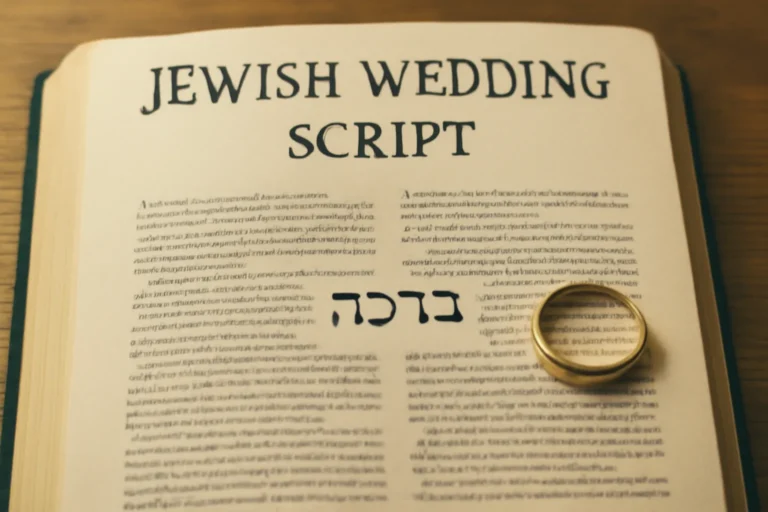
Jewish Wedding Traditions and Significance | Celebrating Love
A Jewish wedding is a sacred and joyous ceremony that embodies centuries of tradition, religious law, and cultural customs. It signifies the union of two individuals in marriage, rooted in biblical commandments and rabbinic teachings. The ceremony is marked by meaningful rituals that symbolize commitment, faith, and the divine blessing of the couple’s union.
Throughout history, Jewish weddings have incorporated various customs that reflect the spiritual and cultural heritage of the Jewish people. From the exchange of rings to the breaking of a glass, each tradition carries deep symbolic meaning, emphasizing themes of love, fidelity, and the sanctity of marriage. These customs vary among different Jewish communities but universally highlight the importance of partnership and divine blessing in Jewish life.
📊Profile
Hebrew name
Chupah (חופה) – meaning ‘canopy’
Date in Hebrew calendar
Varies (based on wedding date)
Date in Gregorian calendar
Varies (based on wedding date)
Duration
Approximately 1-2 hours
Type
Rabbinical and cultural
Category
Marriage ceremony
Torah portion
Varies depending on the time of year
Key mitzvot
Marriage (Kiddushin), honoring spouse
Symbolic foods
Wine, challah bread
Greeting/phrase used
Mazal Tov (Congratulations)
📜History and Significance
Historical Roots of Jewish Weddings
Jewish wedding traditions trace back to biblical times, with the earliest references found in the Torah. The institution of marriage was considered a sacred covenant, with laws established to sanctify the union and ensure its spiritual significance. Over centuries, rabbinic authorities developed detailed rituals to uphold the sanctity and social importance of marriage within Jewish communities.
Spiritual Significance and Cultural Evolution
Historically, Jewish weddings served as a public declaration of commitment and a spiritual act blessed by God. The rituals symbolize not only the personal union but also the continuity of Jewish life and faith. As Jewish communities dispersed and evolved, so did wedding customs, integrating local cultural influences while maintaining core religious principles. Today, Jewish weddings remain a profound expression of faith, love, and cultural identity, blending ancient traditions with contemporary practices.
Modern Jewish weddings often adapt traditional customs to fit personal preferences and contemporary contexts. While the essence of the rituals remains unchanged, couples may incorporate personalized vows, diverse musical styles, or inclusive practices. Despite these adaptations, the fundamental themes of divine blessing, community celebration, and the sanctity of marriage continue to define Jewish wedding ceremonies worldwide.
🕯️Traditions & Customs
The Chuppah and Ketubah
The wedding begins with the couple standing under a chuppah, a canopy symbolizing the new home they will build together. The signing of the ketubah, a marriage contract, is an essential part of the ceremony, outlining the husband’s responsibilities and the wife’s rights. This document is often artistically decorated and read aloud during the wedding.
The Ring Exchange and Blessings
The groom places a ring on the bride’s finger, traditionally a plain band, while reciting the appropriate blessings. In some communities, the bride also gives a ring to the groom. Following this, the officiant recites blessings over wine, which the couple drinks together, symbolizing joy and gratitude. The ceremony concludes with the breaking of a glass, a poignant reminder of the fragility of life and the destruction of the Temple in Jerusalem.
Differences Between Ashkenazi and Sephardic Customs
Ashkenazi weddings often include the breaking of the glass and the recitation of specific psalms, while Sephardic ceremonies may incorporate additional prayers and unique musical traditions. Sephardic customs might also involve more elaborate processions and different celebratory foods. Despite these variations, the core elements of sanctity and joy remain central to all Jewish weddings.
Throughout the ceremony, family and friends participate in singing, dancing, and celebrating, emphasizing community and shared joy. The wedding is not only a union of two individuals but also a reaffirmation of Jewish values and heritage.
In some traditions, the groom stomps on the glass with his foot, symbolizing the seriousness of marriage and the hope for happiness despite life’s challenges.
🕯️
Jewish wedding celebrations often include lively dancing called ‘Hora,’ where guests lift the bride and groom on chairs in a joyful circle.