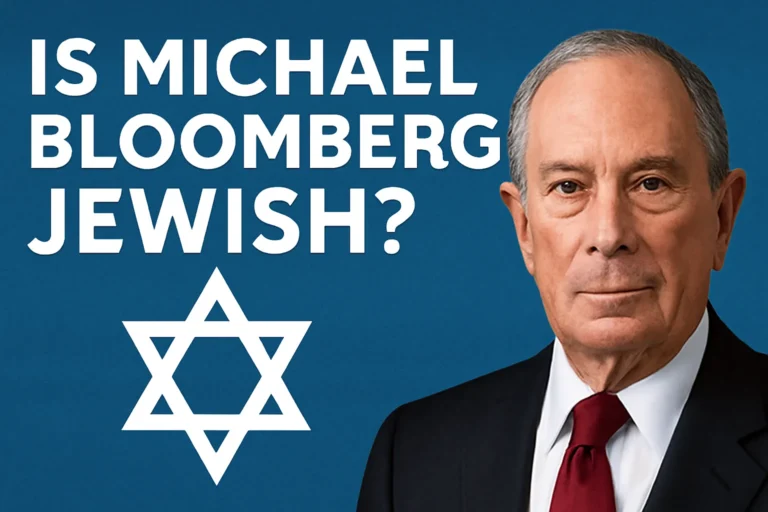
Overview: Michael Bloomberg on Israel and why his public remarks matter
Michael Bloomberg, founder of Bloomberg LP and a long-time public figure in American politics and philanthropy, has offered a series of public remarks, policy suggestions, and strategic positions that touch on Israel at multiple junctures. While he is best known for his business and civic roles, his statements about Israel have attracted attention from policymakers, international observers, and business leaders who watch the intersection of economic interests, security concerns, and regional diplomacy.
This article compiles, analyzes, and contextualizes the kinds of statements associated with Michael Bloomberg on Israel, including the broad topics he has emphasized, the normative stances he appears to favor, and the potential implications for U.S. policy, Israeli diplomacy, and the global business environment. It draws on public remarks, interviews, and reporting that describe how Bloomberg on Israel policy translates into practical perspectives on peace, security, economics, and human rights. Throughout, we use variations of the phrase “michael bloomberg on israel” to reflect the semantic breadth of how audiences search for and discuss his views.
Key statements and recurring themes: what the Bloomberg-on-Israel narrative tends to emphasize
Across multiple appearances and public communications, supporters and critics alike have noted a set of recurring themes in Bloomberg’s commentary on Israel. The following sections summarize these themes in a structured way, highlighting the core ideas that show up most often when michael bloomberg on israel is discussed in media, think tanks, and public forums.
Security and defense first: ensuring Israel’s safety in a volatile neighborhood
A central aspect of Bloomberg’s perspective on Israel has been a strong emphasis on security and defense cooperation with the United States and other partners. Publicly, he has underscored the importance of maintaining robust security support for Israel, while also advocating for mechanisms that reduce conflict and increase stability in the region. In discussions about Israel’s security challenges, he tends to frame the issue around credible deterrence, advanced technology and intelligence collaboration, and defense readiness as a prerequisite for broader political progress.
Deterrence and resilience: He has pointed to the value of deterrent capabilities that help Israel navigate threats while allowing diplomatic channels to remain open.
Technological cooperation: Bloomberg’s remarks often highlight the role of joint research, cyber-security, and defense-industrial partnerships between Israel and global partners.
Stability as a foundation: A recurring reading of his positions links long-term peace prospects to the perception that Israel’s security environment is stable enough to enable negotiations.
Two-state framework and negotiations: support for negotiated peace as a strategic objective
In public discussions about the Israeli-Palestinian conflict, Bloomberg on Israel frequently aligns with a view that a negotiated settlement is essential to regional stability. While he may stop short of endorsing a single, fixed framework in every telling, the emphasis tends to be on a political process that recognizes the legitimacy of both Israeli security concerns and Palestinian state aspirations. The logic implied in these statements is that political resolutions—not unilateral actions alone—are necessary for durable peace and for allowing Israeli society and regional economies to flourish together.
Two-state rationale: The broad position suggests that a credible path to peace includes Palestinian autonomy alongside Israeli security guarantees.
Direct negotiations: He often appears to favor direct engagement between parties, with international actors playing facilitative roles rather than imposing terms from above.
Balancing principles: The stance tends to balance security, self-determination, and mutual recognition in a way that seeks to minimize cycles of violence.
Economic integration, innovation, and regional growth: linking prosperity to peace
An important dimension of michael bloomberg on israel concerns the ways in which Israel’s remarkable innovation ecosystem intersects with regional and global economies. In public remarks and interviews, he has highlighted how Israeli tech, healthcare, water technology, and other sectors can contribute to broader economic development—especially when political tensions subside. The argument is that economic ties and collaborative projects can create incentives for stability and shared interests that go beyond political rhetoric.
Tech diplomacy: Emphasis on cross-border tech partnerships and the growth of regional innovation hubs.
Investment climate: Recognition that secure economic conditions support long-term investments in both Israeli and Palestinian communities.
Diasporic and global ties: The appeal of connecting Israeli innovation to global markets, including the United States, Europe, and beyond.
Democratic values, human rights, and rule of law: a civil-society lens on Israel
Another strand that appears in discussions of Bloomberg’s views on Israel frames the issue through a lens of democratic norms and human rights. In some contexts, he has been associated with calls to ensure that Israeli policies are coherent with universal rights standards, while also recognizing the right of Israelis to determine their own political future in a secure environment. This approach tends to stress that human rights considerations and democratic values can coexist with security imperatives and economic growth.
Rights-based frameworks: An appeal to safeguards for minority rights, religious freedom, and civic participation within all negotiated settlements.
Civil society engagement: Encouragement of independent media, legal institutions, and NGO activity as components of a healthy regional democracy.
Judicial independence: Emphasis on upholding rule of law as a cornerstone of both Israeli and Palestinian governance.
Stability and humanitarian considerations: addressing the humanitarian dimensions of conflict
In examining the humanitarian consequences of the Israeli-Palestinian conflict, Bloomberg’s commentary often stresses that stability and predictable governance are crucial for alleviating human suffering. He has suggested that the international community should support humanitarian initiatives, economic development projects, and aid programs that help ordinary people in both Israeli and Palestinian communities, with an eye toward reducing grievances that fuel cycles of violence.
Aid and development: Support for targeted, accountable aid programs that reach vulnerable populations without becoming entangled in political agendas.
Welfare and livelihoods: Focus on job creation, access to healthcare, and educational opportunities as part of a broader peace dividend.
Preventive diplomacy: Encouragement of diplomatic tools that mitigate escalation and protect civilians in tense moments.
Stance and positioning: what the Bloomberg on Israel stance communicates about his broader worldview
The way Michael Bloomberg on Israel is framed in public discourse reflects a broader narrative about his policy orientation, which blends pragmatic diplomacy, economic pragmatism, and a commitment to democratic principles. When media outlets describe Bloomberg’s position on Israel, they often point to the following underlying messages: a preference for a durable peace built on negotiations, a belief that security and prosperity reinforce one another, and a sense that U.S. leadership should be anchored in stable alliances while encouraging progress toward a two-state framework.
Pragmatic realism: balancing hard security with political possibility
A practical strand in the Bloomberg on Israel policy narrative is a call for realism about what is achievable in the near term. This includes acknowledging security threats and the political constraints that shape decisions in both Tel Aviv and Washington. In this light,Bloomberg’s remarks often advocate for a measured approach that avoids perpetual stalemate and seeks incremental steps that can build confidence on both sides.
Global engagement and American leadership: a transatlantic and global perspective
The stance associated with michael bloomberg on israel also situates Israel within a broader network of American alliances and international institutions. In this framing, U.S. leadership is exercised with care—supporting Israel’s security while encouraging policies that align with international norms and a rules-based order. This global orientation suggests an expectation that regional peace and security are inseparable from the health of the international system, including trade, finance, and technology flows.
Economic pragmatism and social impact: aligning business interests with public policy
The intersection of business interests and foreign policy shows up in how Bloomberg on Israel is discussed in corporate and philanthropic circles. The argument goes that a stable, innovative Israel offers opportunities for investments, collaborations, and market expansion, and that these opportunities are best realized in a context where political risk is managed and peace prospects improve. This lens highlights a business-friendly approach to diplomacy and the idea that shared economic prosperity can be a catalyst for political progress.
The articulation of the Bloomberg-on-Israel perspective has practical implications across several domains. For policymakers, investors, and civic actors, these implications shape how strategy is crafted, how partnerships are pursued, and how public narratives influence the likelihood of peace
processes advancing. The following subsections outline several layers of impact.
Policy implications for U.S. diplomacy and regional stability
If the public interpretation of Michael Bloomberg on Israel emphasizes a balanced approach that links security guarantees with political negotiation, it could steer U.S. diplomacy toward renewed commitments to two-state discussions and a calibrated security framework. This might include: increased support for security cooperation that remains tethered to political pathways; encouragement of confidence-building measures that foster trust; and a willingness to engage in multilateral diplomacy that includes regional actors and international institutions.
Diplomatic leverage: A stance that pairs security assurances with diplomacy could influence how the U.S. leverages aid, sanctions, or negotiation platforms.
Conflict de-escalation: Emphasizing humanitarian considerations and stability could push for measures designed to reduce civilian harm and prevent escalation during flashpoints.
Framework flexibility: An openness to exploring adaptable frameworks, rather than rigid mandates, may provide space for innovative peace proposals.
Business and technology implications: Israel’s role in global markets
The economic dimension of Bloomberg’s stance suggests a continuity between political risk management and the pursuit of opportunity in tech, energy, and finance sectors. For corporations, investors, and philanthropic partners, the implication is a call to pursue constructive engagement that accounts for political realities while supporting innovation ecosystems. The practical takeaway is that Israel’s tech economy remains a magnet for global investment, collaboration, and talent—provided that risk is managed and partnerships are built on credible governance and predictable policy signals.
Cross-border investment: Encouraging transparent investment climates can attract capital while supporting regional growth.
Public-private partnerships: Collaboration on water, energy, healthcare, and cybersecurity offers mutual gains for Israeli and international communities.
Responsible business practices: Firms may be urged to conduct due diligence on human rights, labor standards, and impact in project regions as part of a sustainable growth strategy.
Public opinion, civil discourse, and media framing
How the Bloomberg-on-Israel conversation is framed in media and public discourse matters for how policy is perceived. A balanced narrative that foregrounds security, prosperity, and rights in a way that respects both Israeli and Palestinian narratives can contribute to a more nuanced public understanding. This has the potential to influence the pace and tone of policy discussions in capitals around the world, including city halls, legislative bodies, and international forums.
As with any prominent public figure who speaks about a protracted and complex conflict, the Bloomberg on Israel discourse has inspired a range of reactions. Supporters often applaud a pragmatic, pro-trade, security-conscious approach that seeks stability and prosperity. Critics may argue that a focus on security and economic development risks neglecting urgent humanitarian concerns or undermining Palestinian self-determination. In discussing michael bloomberg on israel, observers frequently highlight tensions between security considerations and rights-based approaches, cleanly separating questions of policy from moral judgments.
Supporters: Stress the importance of stability, predictable leadership, and a balanced foreign policy that keeps lines of communication open with both sides.
Critics: Worry about whether economic and security-centric framing could sideline questions of settlement policy, refugee rights, or the political feasibility of a two-state outcome.
Ambiguity and nuance: Some analysts appreciate the attempt to articulate a multi-dimensional view but still seek more concrete policy prescriptions and timelines.
Bloomberg on Israel in context with peers and predecessors
When comparing the Bloomberg-on-Israel stance with those of other public figures, several contrasts emerge. Some leaders emphasize a hawkish security posture and unwavering solidarity with hardline positions, while others advocate for more aggressive settlement skepticism or more aggressive diplomatic pressure on both sides. Bloomberg’s approach sits somewhere in the middle, often leaning toward a policy mix that combines regional cooperation, economic growth, and a preference for negotiations as the path to long-term peace. This comparative lens helps explain how business executives, philanthropists, and former mayors can shape international discourse in ways that are distinct from traditional diplomats.
How his approach contrasts with other business and political voices
Compared to hardline voices: Bloomberg’s emphasis on negotiations and humanitarian considerations may be perceived as more nuanced or measured than those who advocate for unilateral moves or maximalist terms.
Compared to unconditional support narratives: He often appears to resist slogans that equate alliance with blind support, instead favoring a conditional approach that links durable peace to practical outcomes.
Compared to humanitarian-only voices: While humanitarian concerns are acknowledged, the business and innovation focus adds a distinct emphasis on economic interdependence and regional development as levers for peace.
Michael Bloomberg on Israel might translate into real-world outcomes
To ground the discussion in practical terms, consider a few scenarios that illustrate how the themes associated with Bloomberg on Israel could shape decisions in policy or enterprise.
Scenario A: A renewed U.S.-Israel strategic dialogue anchored in regional economic initiatives
In this scenario, the United States leads a renewed strategic dialogue with Israel that includes a regional economic initiative aimed at promoting cross-border commerce, water technology, and energy projects. The narrative would emphasize security assurances, but also foreground economic development as a pathway to broader peace. Businesses might participate through joint ventures, export promotion, and public-private partnerships that facilitate technology transfer and job creation in both Israeli and Palestinian territories.
Scenario B: Confidence-building measures that reduce civilian harm in volatile months
A second scenario focuses on confidence-building measures designed to reduce civilian harm during periods of heightened tension. This could include humanitarian corridors, deconfliction arrangements for air and land operations, and targeted aid programs that support schools, clinics, and livelihoods. The emphasis would be on human security alongside traditional security metrics, reflecting a comprehensive approach to risk reduction.
Scenario C: A phased approach to a two-state framework with measurable milestones
The third scenario imagines a phased, milestone-based approach to a two-state framework, where progress on security, governance, and mutual recognition is assessed at regular intervals. Such an approach would require sustained political will, credible mediators, and transparent accountability. It would also rely on the private sector as a stabilizing force that can help to bridge gaps through economic opportunity, education, and collaboration across communities.
Michael Bloomberg on Israel and its broader significance
The conversation around Michael Bloomberg on Israel reflects a broader pattern in which public figures who straddle business leadership, philanthropy, and public policy weigh in on a highly contested regional issue. The core elements—an emphasis on security, peace through negotiation, economic growth, and human rights considerations—together form a nuanced stance that seeks to balance immediate security needs with longer-term political possibilities. While individual interpretations of his statements may vary, the overarching frame points toward a vision of sustainable regional stability supported by a robust alliance with the United States, pragmatic engagement with regional partners, and a persistent belief in the transformative power of innovation to help realize a more peaceful future.
For readers seeking to understand the Bloomberg-on-Israel narrative, it is important to consider the broader context in which a figure of his profile speaks: the influence of business networks, the pressures of global diplomacy, and the moral responsibilities that accompany public leadership. The takeaway is not a single policy prescription, but a complex mosaic of ideas about how to connect security, prosperity, and human dignity in a region that has long demanded difficult choices. As the discourse continues to evolve, observers will watch how his stated principles translate into concrete policies, partnerships, and projects that shape the future of Israel, Palestine, and the broader Middle East.